Hubble Captures M88’s Spiraling Journey Toward the Virgo Cluster Core
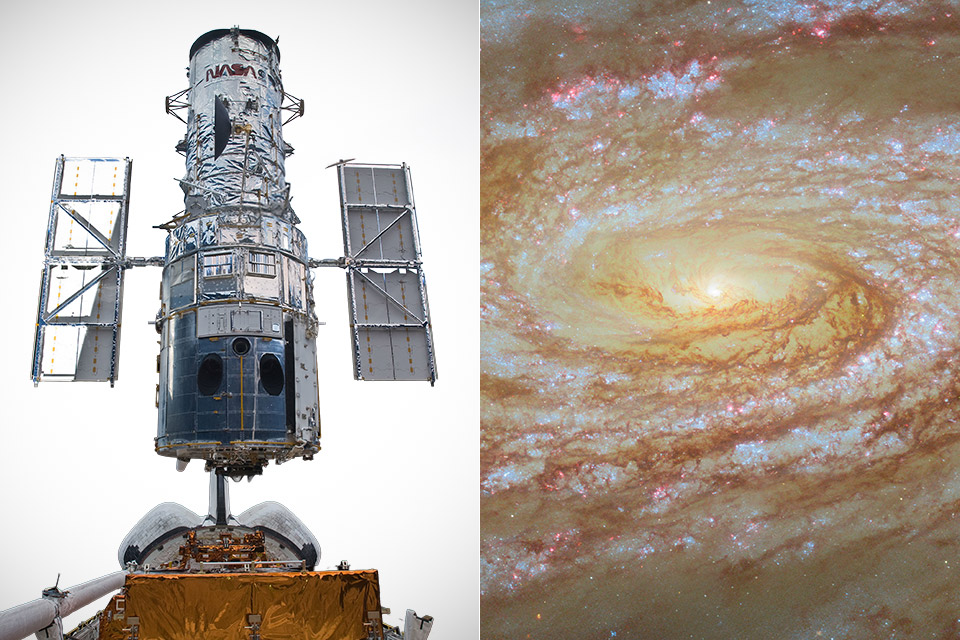
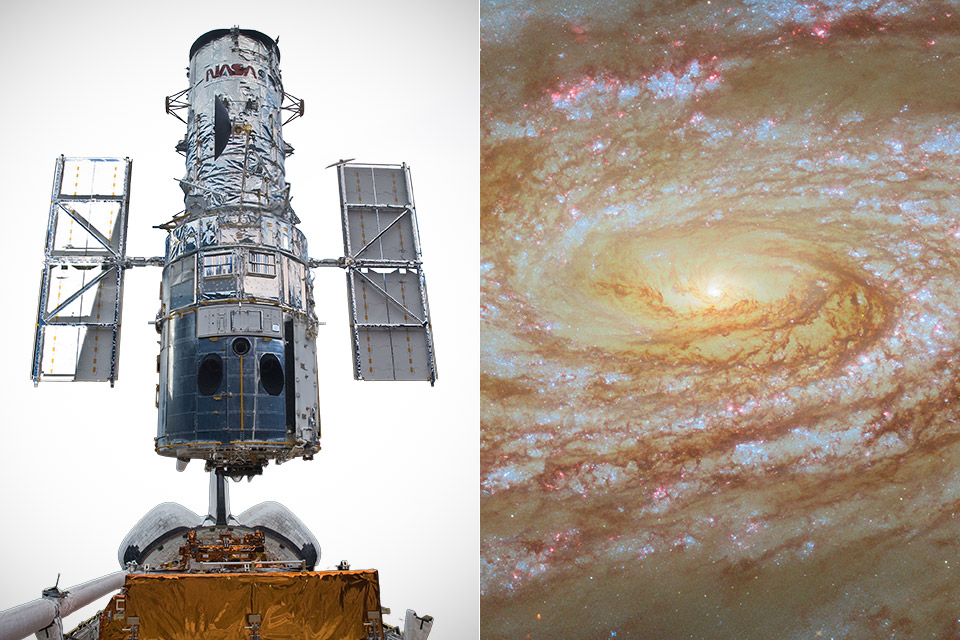
Hubble’s Wide Field Camera 3 captured a stunning composite image of galaxy M88, which shows a massive spiral system twisted at an angle, stretching its appearance and displaying an orderly set of arms looping inward with exceptional symmetry. Pink knots represent the formation of new stars, blue clusters outline younger stellar populations, and darker red lanes highlight the disk’s dust. The galaxy’s nucleus is surrounded by older stars that emit a warm light.
Charles Messier cataloged this object in 1781 while looking for any comet-like bodies in our skies. Later generations attempted to locate it in the Virgo Cluster, a huge collection of over a thousand galaxies crammed into a relatively large region of space that is roughly oriented toward the Coma Berenices constellation. M88 is just about 60 million light-years from the Milky Way. The galaxy spans around 130,000 light-years and contains several hundred billion stars. Its disk is slightly tilted, approximately 64 degrees, resulting in an elongated form rather than a perfect circle. Surprisingly, the elongation does not appear to impair the exceedingly regular spiral arms. Even the core region appears to be accurate, with no obvious disruptions or distortions to report.
Sale

LEGO Technic Planet Earth and Moon in Orbit Building Set, Outer Space Birthday Gift for 10 Year Olds…
- Interactive model – Inspire kids to build a representation of the Earth, Sun and Moon in orbit with this LEGO Technic Planet Earth and Moon in Orbit…
- Educational space toy – Kids can turn the crank to see how the Earth and the Moon orbit around the Sun
- Includes months and moon phases – This solar system toy includes printed details, like the month and moon phases to help kids see how the Earth’s…
This supergalaxy contains a supermassive black hole with a mass of 80 to 100 million suns. Gas and dust conduct a cosmic dance as they spiral towards this behemoth, releasing energy that flows everywhere. This frantic activity has classified M88 as a Seyfert 2 galaxy, which is not the most common sort of galaxy, but don’t expect much star-birth here. M88 is not cruising through a vacuum, as one might expect, but rather a member of the Virgo Cluster, where the only thing that separates member galaxies is scorching hot gas. As it rushes ahead, this hot gas generates a slight headwind, causing the galaxy’s gas disk to feel squashed. Especially in the front, where material is squeezed and gas is drawn from outside areas, this is enough to significantly decrease the flow of gas to new star formation, particularly in the outer disk.
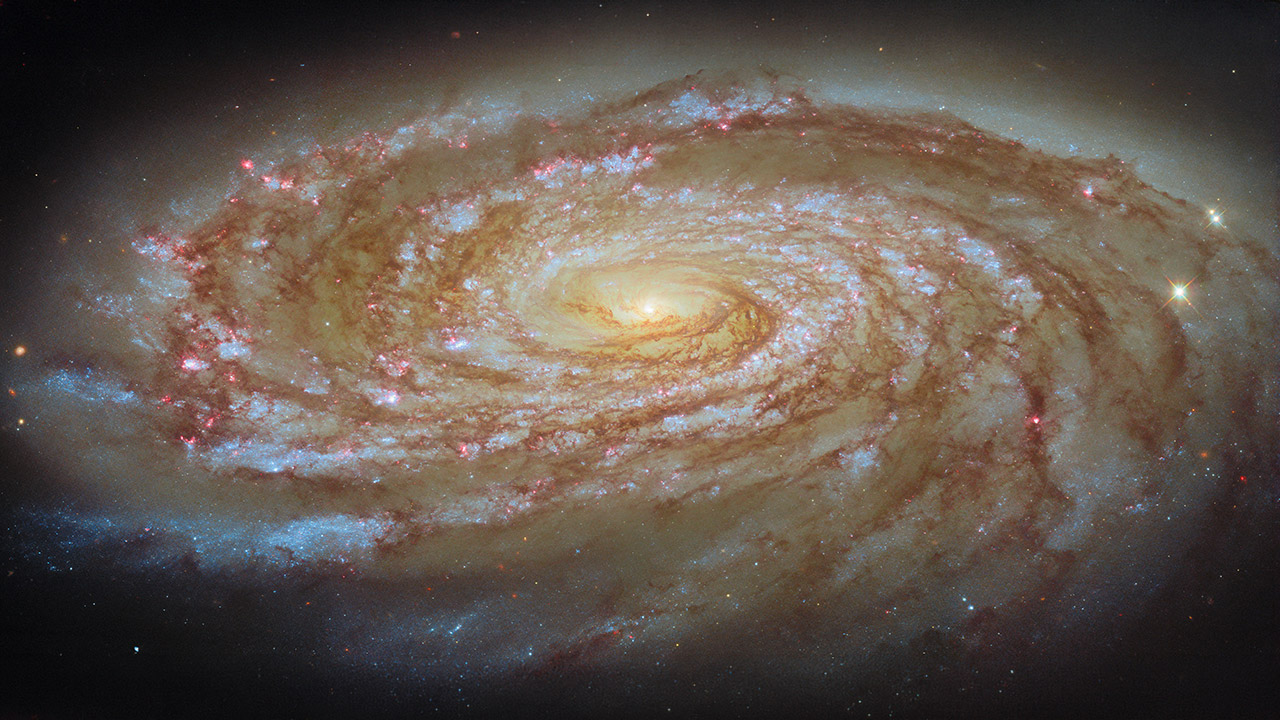
Hubble program 18103 investigated a few spirals within one of these tight clusters to see how much the environment controls them. The image of M88 illustrates where stars may still be seen despite the pressure, as well as how the dust lanes have reacted to the overall movement. Guess what? The outer regions of the disk are already showing less activity than one would expect from a galaxy of this size and type. The most accurate measurement places M88 about a couple of million light-years from the cluster’s center point. In addition, it will collide with the massive elliptical galaxy M87 in around 200-300 million years. This will result in M88 being completely mauled by tidal pressures and subsequent interactions with the hot cluster medium.
Hubble Captures M88’s Spiraling Journey Toward the Virgo Cluster Core
#Hubble #Captures #M88s #Spiraling #Journey #Virgo #Cluster #Core