DIY High Speed Camera Robot Can Track a Flying Bee in Real Time
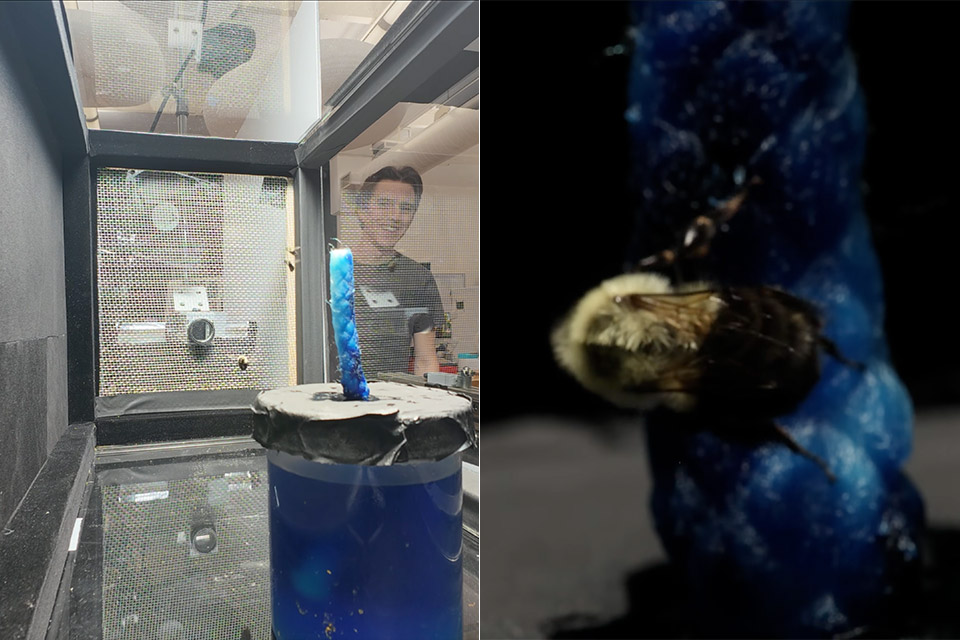
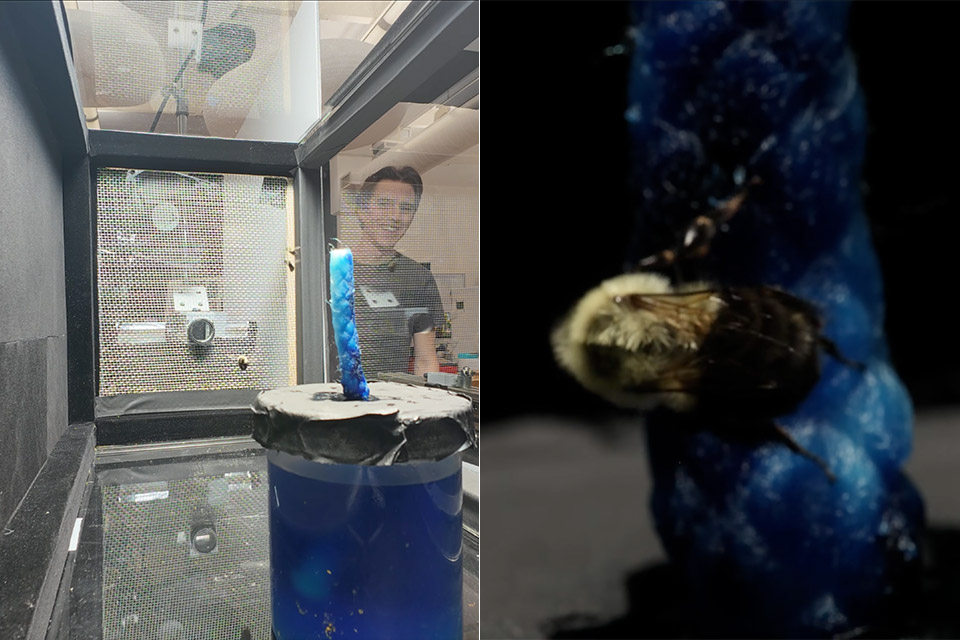
Filming a bumblebee in mid flight with a macro lens has always demanded impossible timing and focus. The depth of field shrinks to a fraction of a millimeter while the insect darts unpredictably, so a stationary camera almost never keeps the subject sharp for more than a few frames. Maker and engineer Jeremy Fielding spent roughly a year solving that problem with a custom robot that carries a cinema camera along a motorized rail, tilts to follow vertical movement, and continuously adjusts the lens focus ring so the bee stays both centered and sharp.
OpenCV was designed to detect bees by looking for a high-contrast yellow blob against a dark background, rather than using a neural network to scan every single frame, as some other systems do. This results in a fast full-frame search of roughly 32 frames per second; but, once the bee has been identified, the program swiftly narrows its attention to a relatively tiny view surrounding where the bee was last seen, increasing speed to around 60 frames per second. When combined with two additional cameras that form a stereo pair to calculate distance in real time, the system becomes extremely accurate. A motor with an encoder then adjusts the movie lens to match the focus.
Sale
DJI Osmo Pocket 3 Vlogging Camera with 1” CMOS & 4K/120fps Video | 3-Axis Stabilization, Fast Focusing…
- Capture Stunning Footage – Osmo Pocket 3 vlogging camera features a 1-inch CMOS sensor and records in 4K resolution at an impressive 120fps. Capture…
- Effortlessly Frame Your Shots – Get the ideal composition with Osmo Pocket 3’s expansive 2-inch touch screen that rotates for both horizontal and…
- Ultra-Steady Footage – Say goodbye to shaky videos! Osmo Pocket 3’s advanced 3-axis mechanical stabilization delivers superb stability. Enjoy smooth…
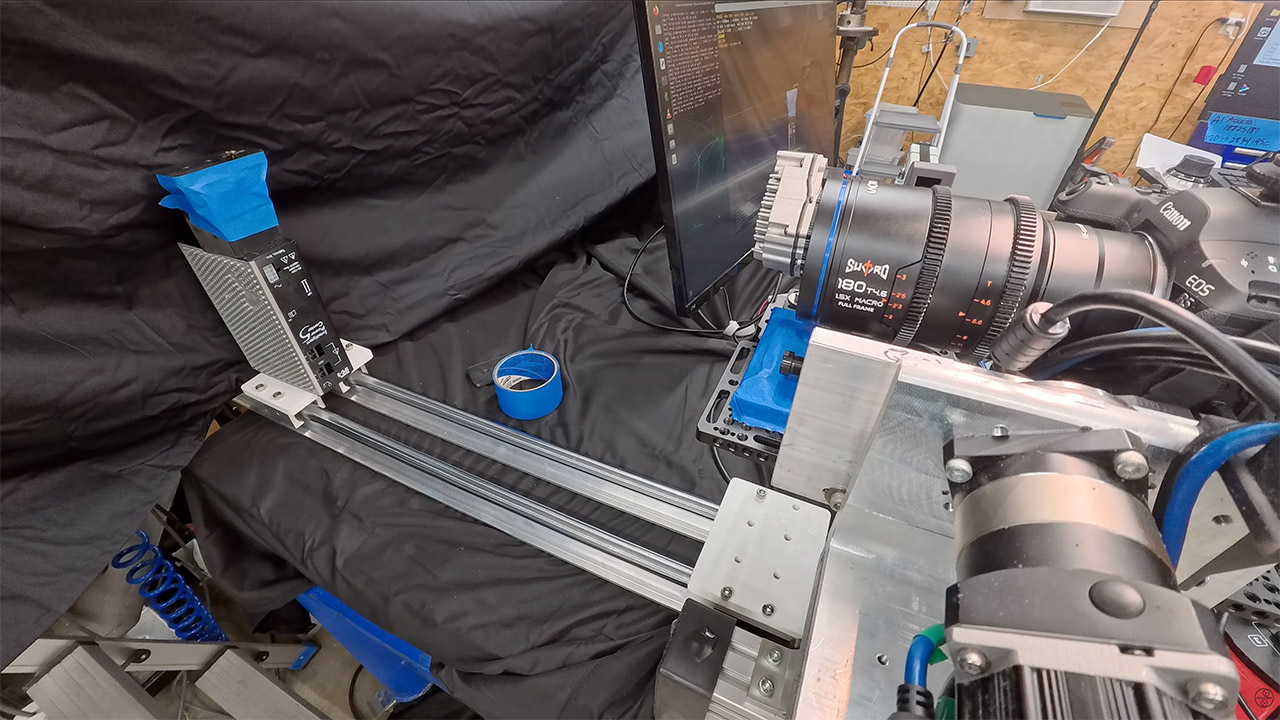
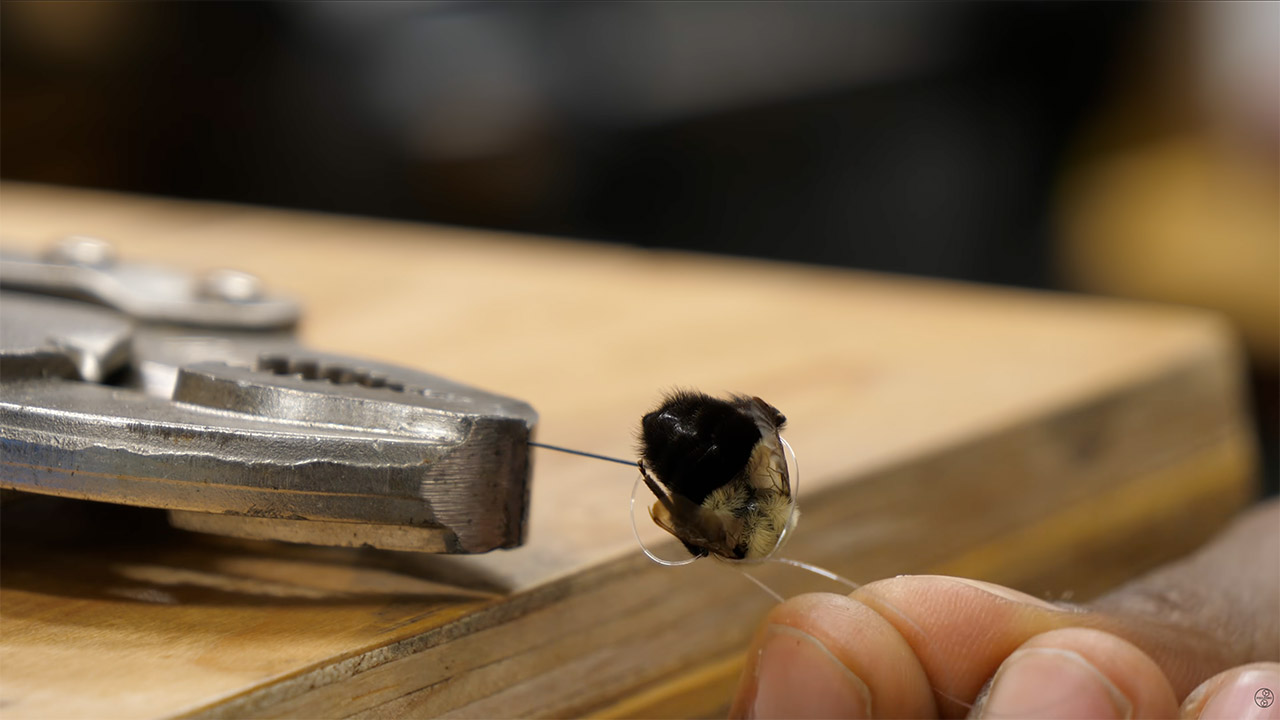
The motor has been manually calibrated to fit a focus ring that does not move in a perfect straight line with distance. Pete Fielding created a calibrated curve using a specimen he’d placed at various measured intervals and focussed with the peaking tool. He then logged the encoder data and compared it to a caliper, allowing the system to automatically accomplish the same thing based on the stereo depth measurement.
The main axis of travel is supplied by a high-quality belt-driven linear rail, while the camera head, stereo pair, and focus motor are held in place by a variety of custom CNC-milled steel brackets and mounts. Early prototypes aimed for maximum speed, but it turned out that real-life bumblebees don’t fly as quickly as we imagined, therefore the final design prioritized smooth motion and easy swapping out of parts over sheer speed. The system’s control software determines how far the bee is from a target point in the frame before smoothly moving the rail and tilt axs with just enough dampening to keep the item from overshooting and oscillating violently. Safety features such as limit switches and emergency brakes are also included to halt the system if something goes wrong.
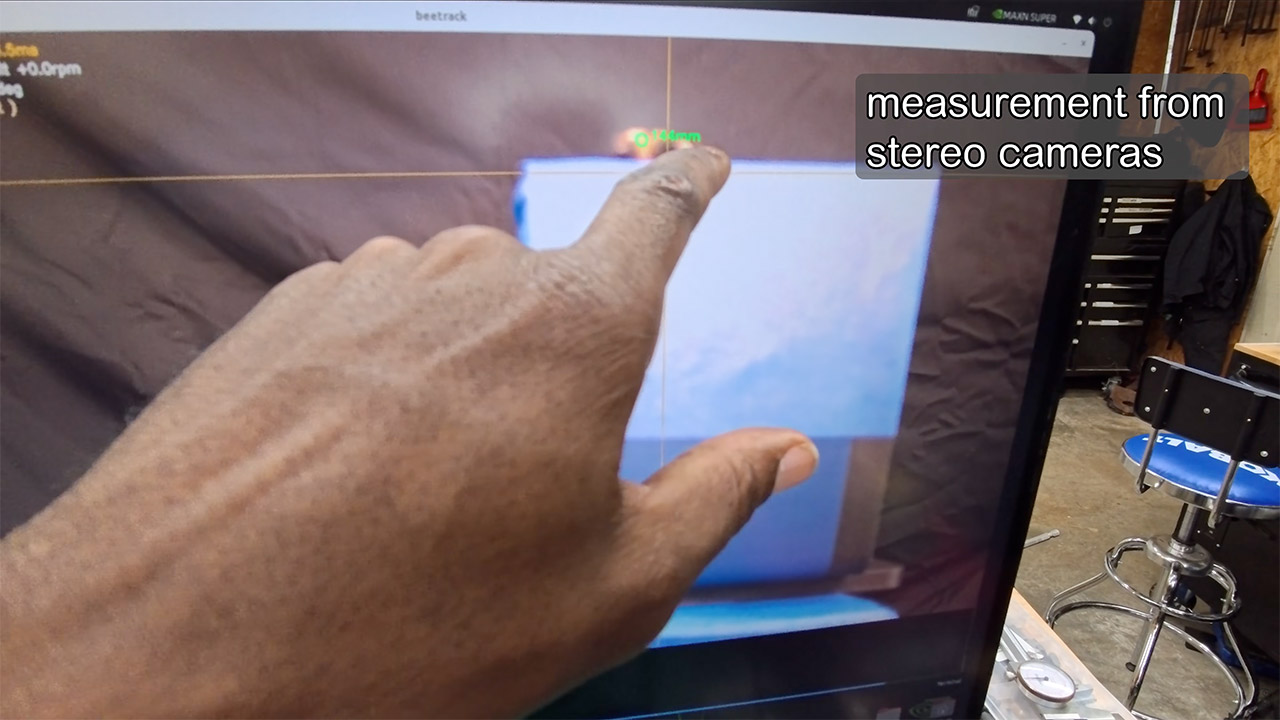
Getting the stereo pair to produce a good set of data was difficult because you’d get frames that looked fine to the eye, but the system could detect minor variations that would throw off its accuracy. Pete added a check to lock the shutter speed, and the system was eventually able to lock down a solution, with one of the readings matching a caliper measurement exactly at 144 mm.
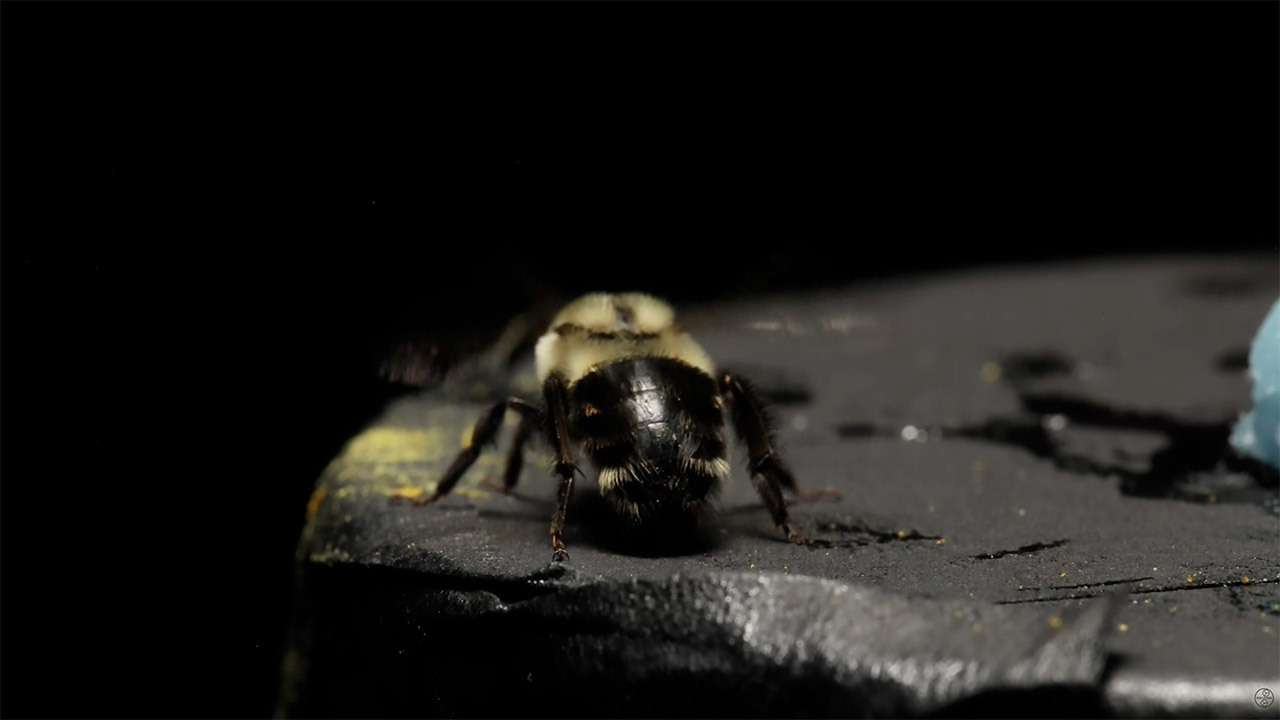
After about a year of tuning, the finished rig left Pete’s workshop and traveled to Berkeley, California, to join a bumblebee study team. The partnership became a reality thanks to funding from the Alfred P. Sloan Foundation. Once delivered to the study team, the system was set to work tracking a yellow chick as a test subject before eventually transitioning to a trained colony inside a three-by-one-by-one-foot flight arena. It was also able to capture both static and in-flight footage of the bees, however it still requires an operator to switch to a new individual mid-shot, and everything happens at high frame rates. A faulty belt connection that began clicking and shaking the camera shortly before it was shipped was happily repaired by using a spare belt configuration that Pete had previously made.
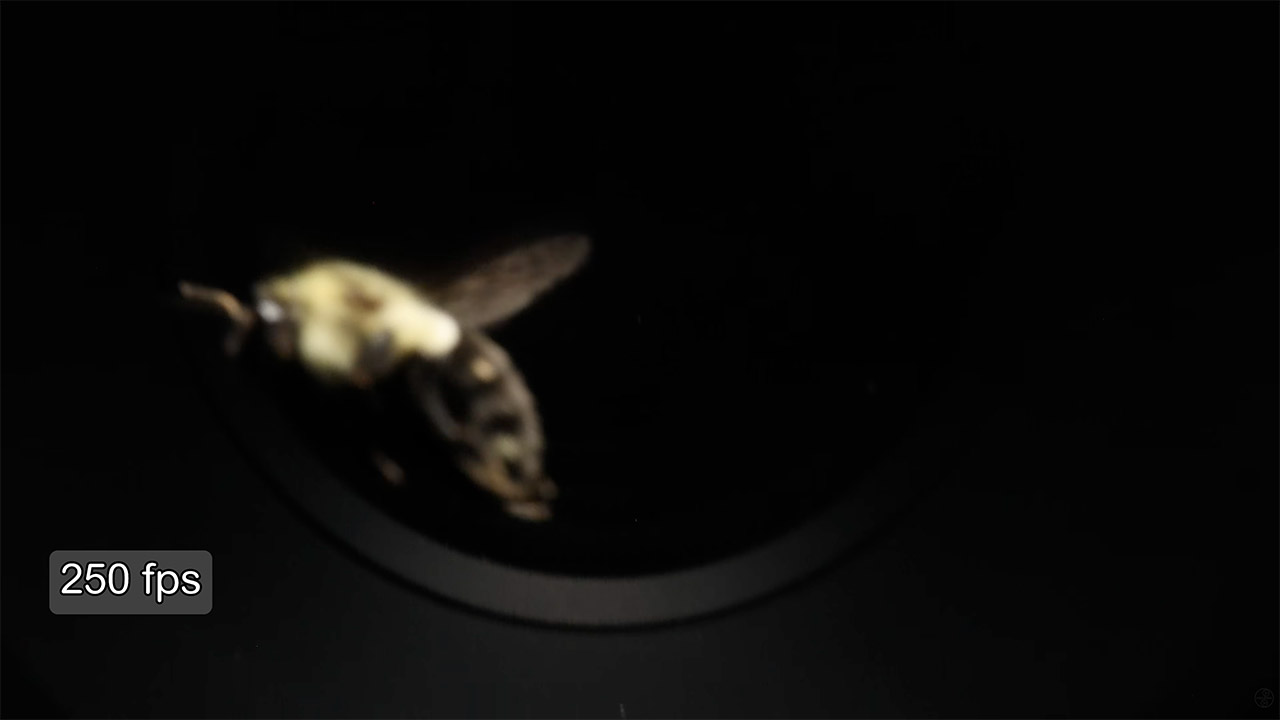
High-speed cinema cameras and macro lenses remain expensive, so the design uses only one of each and keeps the main camera outside a clear enclosure so the bees never walk across the glass or obstruct the view. The tracking cameras use global-shutter sensors to eliminate rolling-shutter distortion and provide an exact timestamp for each frame. When you combine simple color blob detection, stereo depth, and a little of mechanical follow-through, you get to transform something that would typically be all over the place into steady, focused footage that academics and photographers can actually use.
[Source]
DIY High Speed Camera Robot Can Track a Flying Bee in Real Time
#DIY #High #Speed #Camera #Robot #Track #Flying #Bee #Real #Time