Colombians, weary of violence, prepare to vote in polarizing election
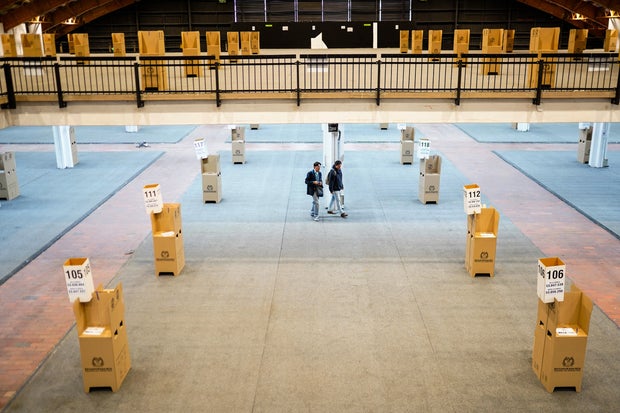
Millions in Colombia will head to the polls on Sunday to cast their vote in a high-stakes presidential election that is expected to result in a runoff between two strikingly different candidates.
A new president could be elected, but no candidate is expected to clear the 50% threshold required to win in the first round. A runoff between the top two finishers is almost certain on June 21.
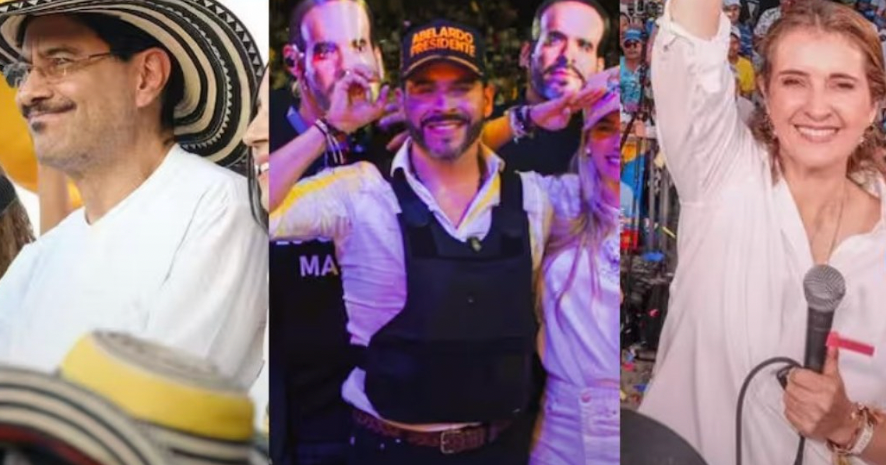
Polls show that the race between the 14 candidates on the ballot has narrowed down to three names, though two dominate. On the far left is Senator Iván Cepeda, candidate of the ruling Pacto Histórico party and the heir to President Gustavo Petro’s policies. On the far right is Abelardo de la Espriella, a lawyer who has modeled his rhetoric and optics after President Trump and El Salvador’s Nayib Bukele. Right-wing Senator Paloma Valencia, backed by former President Álvaro Uribe, has positioned herself as a center-right candidate.
An AtlasIntel poll published last week, based on 4,531 interviews, put Cepeda leading the first round with a razor-thin margin at 38.7%, over de la Espriella’s at 37.3%, while both candidates more than doubled Valencia’s 14.3%. Moderate presidential candidate and former mayor of Medellin, Sergio Fajardo, trails far behind in the first round. All three candidates, according to the poll, would defeat Cepeda in the runoff.
Sergio Acero/AFP via Getty Images
Colombians will vote on a vision to end violence
Highly polarized Colombia is looking for change. Low-income families living near fields of coca, the shrub used to make cocaine, have watched years of failed peace negotiations make their communities more dangerous. Human rights organizations documented more than 50 massacres in Colombia this year, including clashes between warring guerilla factions this week that left around 50 people dead. Studies show that Petro’s peace negotiation policies have resulted in the expansion of power and membership of armed criminal groups.
The campaign cycle itself has been shadowed by the assassination of a presidential candidate, bombings, kidnappings, and the killing of dozens of local political leaders. Polls show security is among voters’ primary concerns, second only to healthcare. The three leading candidates have offered starkly different solutions to Colombia’s worsening security.
Far-right candidate De la Espriella is a fiery force, literally — he has has used pyrotechnic props at his splashy campaign events. Like President Trump, he is seen as a combative political outsider who has mocked traditional politicians. During the campaign, he has entered into perceived disrespectful clashes, especially with female journalists. He proposes bombing traffickers’ encampments, ending all negotiations with drug traffickers and building 10 maximum-security private megaprisons, inspired by El Salvador’s notorious CECOT, “in the middle of nowhere,” where prisoners would have to “work for their meals.”

Jaime Saldarriaga/AFP via Getty Images
De la Espriella, like Bukele, pushes back against human rights concerns saying the left cares more about the rights of criminals than their victims. He promises to resume the halted aerial fumigation of coca fields with glyphosate, taking down small aircraft and sinking boats carrying drugs.
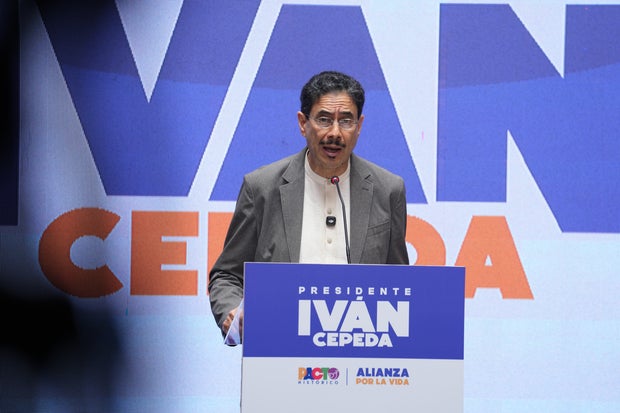
Far-left candidate Cepeda, meanwhile, has policies similar to Petro. He has participated in and continues to promote negotiations with guerillas and cartels. He has been accused by his opponents of having ties with the FARC guerilla, which he denies. Daniel Mejía, a professor who studies drug policy at the Universidad de los Andes in Bogota, described Cepeda as having a “soft hand on not only coca cultivation, but also of organized criminal groups that are in charge of the production of cocaine.”
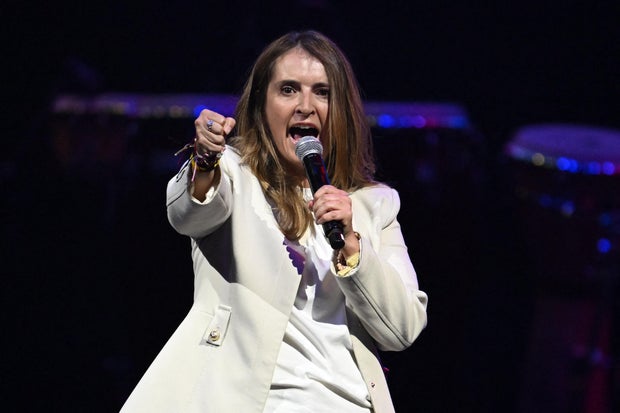
Center-right option Valencia has called for an increase in ground troops and drone surveillance, along with the resumption of aerial fumigation of coca crops. Valencia has criticized de la Espriella and called his online tactics those of a “circus.” Mejía called Valencia’s approach more “balanced,” and said that he believes she would have “soft hand on coca farmers but a very strong hand on drug trafficking organizations and illegal armed groups.”
Raul Arboleda/AFP via Getty Images
Crime isn’t the only issue bringing people to the polls. Business owners who absorbed the biggest minimum wage shock in decades are waiting to see if a new government will reverse or increase it. Voting security is also an area of concern, with observers documenting instances of voter intimidation by armed groups in rural areas. Last year, Colombia’s most powerful drug lord directly threatened violence ahead of this year’s election, warning against what he called “advancing warmongering sectors,” presumptively Colombia’s right-leaning hardliners.
In a press conference last week, Cepeda rejected “any attempt by armed groups to pressure the electorate in one way or another, whether actions that go against, or supposedly in favor of our campaign.”
Juancho Torres/Anadolu via Getty Images
Trump administration could see ally or foe elected
For the Trump administration, the new president of Colombia may be a strong ally or combative foe as the U.S. continues aggressive counternarcotics operations. The administration’s kinetic war on drugs in the Caribbean and eastern Pacific has killed over 200 alleged smugglers in dozens of strikes. The U.S. has also partnered with friendly governments in the region, like Ecuador’s Daniel Noboa, to fight cartels and other drug traffickers.
Following the capture of Venezuelan leader Nicolás Maduro and the U.S. pressure campaign against the Cuban regime, a right-wing victory in the election would also align with the Trump administration’s expanding geopolitical efforts in the region. Jose Antonio Ocampo, Colombia’s former finance minister and a economics professor at Columbia University in New York City, said that Mr. Trump has “been very clear on seeking the support of right-wing governments in countries” in the region.
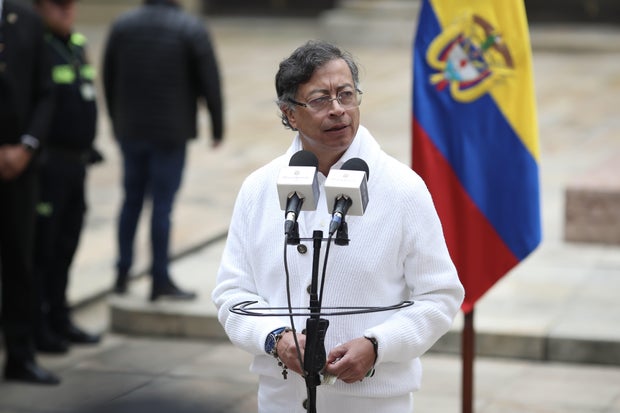
Historically, Colombia has been the United States’ top ally in counternarcotics and one of its most important trade partners in the Western Hemisphere. But U.S.-Colombia relations deteriorated sharply under Petro. The State Department withdrew President Petro’s visa to the U.S., the U.S. Treasury sanctioned him personally, and according to the New York Times, the Department of Justice launched a probe into his alleged meetings with drug traffickers.
Esteban Vege La-Rotta/Anadolu via Getty Images
United Nations calculations also estimate Colombia is producing more cocaine than ever before, despite Petro touting record seizures in interviews with CBS News. In 2025, Mr. Trump formally determined that Colombia had “failed demonstrably” in its counternarcotics commitments and threatened to strike the South American country. Tensions cooled after Mr. Trump and Petro met at the White House in February.
“This is the election where the Colombian people are going to decide which way they’re going to go,” Senator Bernie Moreno, a Republican from Ohio who was born in Colombia, told an Atlantic Council panel last week. “We’ve seen one way, and we just had to take military action in Venezuela to fix that. And we’ve seen other ways where you have unlimited prosperity, unlimited security, unlimited opportunities.”
“If Colombia, heaven forbid, goes the wrong way, what you’re going to see is all the bad actors that are currently in Cuba, Venezuela, Nicaragua, flow through to Colombia,” Moreno added. “That would be an abject disaster for Latin America.”
Colombians, weary of violence, prepare to vote in polarizing election
#Colombians #weary #violence #prepare #vote #polarizing #election