Tourist’s horrifying final moments as 15-foot crocodile killed her while on ‘safe’ moonlit swim
WARNING: DISTRESSING CONTENT A woman met a tragic fate on a celebratory trip with her sister after going for a swim in waters deemed “safe” by their tour guide.

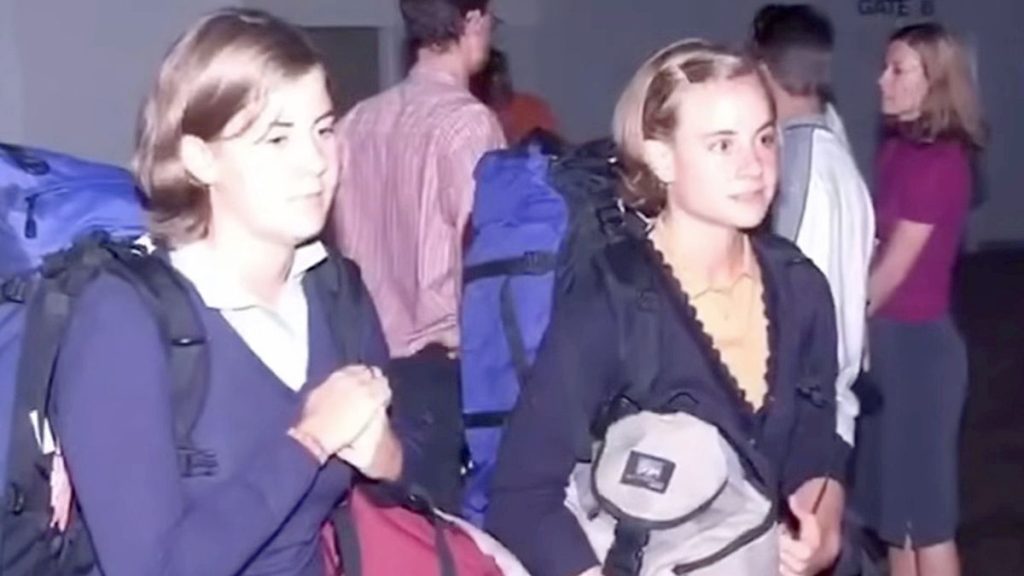
Isabel von Jordan was on a trip with her sister, Valerie(Image: Supplied)
When she went on a trip with her sister to celebrate her recent graduation, the last thing Isabel von Jordan expected was to meet a tragic fate.
The 23-year-old from Germany had just graduated with a degree in interior design from the Technical University of Munich and took her younger sister, Valerie, 21, along to explore Australia in October 2002.
The trip included an adventure through Kakadu National Park, where the duo joined a group of other international tourists, all under the guidance of Glenn Robless – a veteran tour operator from Darwin with years of experience.
On the final night of the tour, the group of seven set up camp near a waterhole known as Sandy Billabong.
That’s when, despite warning signs posted in multiple languages in the area, Robless told the group the nearby waters were safe to swim in.

Saltwater crocodiles are native to the region and inhabit the local waters(Image: Getty Images/iStockphoto)
Saltwater crocodiles are common throughout the park, but the guide had scanned the surface with a flashlight, seen nothing, and reportedly took note of a pile of mussel shells on the bank – likely indicating the presence of Aboriginal people in the water that day.
It is reported that at least one member of the group questioned him more than once about the instructions but was reassured it was fine.
The group enjoyed the water for a few moments before Robless left them in order to make contact with another guide in the area, according to the inquest details.
When left alone, the group was unaware that a crocodile had started swimming amongst them. They only became alarmed later, upon discovering Isabel had vanished beneath the surface. Panicked, they all scrambled back to the shore and began scanning the waters from above, to no avail.
One of the remaining tourists later recounted feeling something brushing against her leg moments earlier, initially assuming it was a joke.

The group was on an extended tour of Kakadu National Park, in Australia(Image: Supplied)
The group called for help, and park rangers navigated the Creek by boat, locating and harpooning the 4.2-metre-long, 400-kg crocodile they believed had attacked Isabel.
After a night of searches conducted by emergency crews, Isabel’s body was found the next morning, on a tributary of the South Alligator River, roughly two kilometres from where she’d gone missing.
The woman had been dragged below the water and, despite what people first suspected, hadn’t died from the crocodile’s bite, but instead from drowning.
One park ranger involved in the search offered a theory during the inquest, speculating that the animal may have been drawn to her size, though he was careful to frame it as speculation rather than as an established fact, since crocodile behaviour, particularly what triggers an attack, is difficult to predict.
The investigation found Robless guilty of a manslaughter charge, though this was later reduced to causing death by dangerous omission. He pleaded guilty in 2003 and received a three-year suspended sentence.
The coroner’s report, released in January 2005, found Robless directly responsible for the safety of a group who were not aware that saltwater crocodiles were common in the park’s waterways. He described the decision to let the group swim as inexplicable and indefensible, calling it grossly negligent.