Samsung Galaxy Camera Merged Full Android Power With a Twenty One Times Optical Zoom in 2012
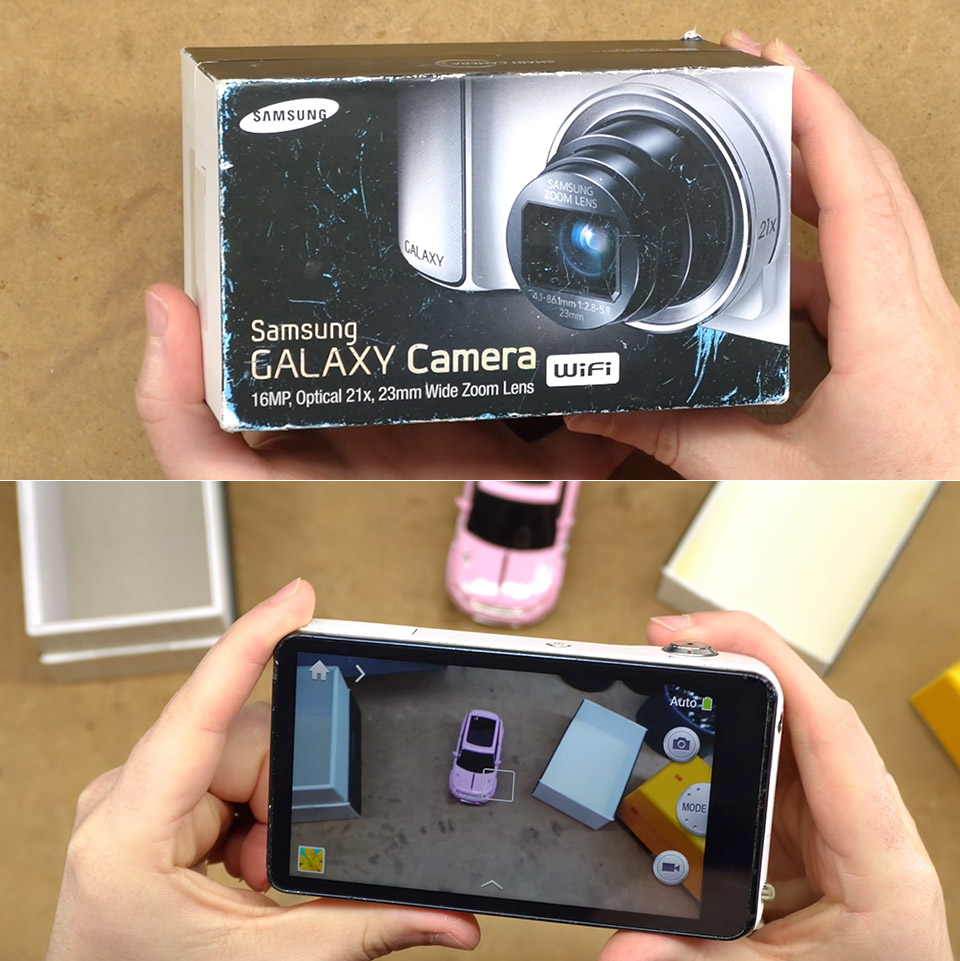
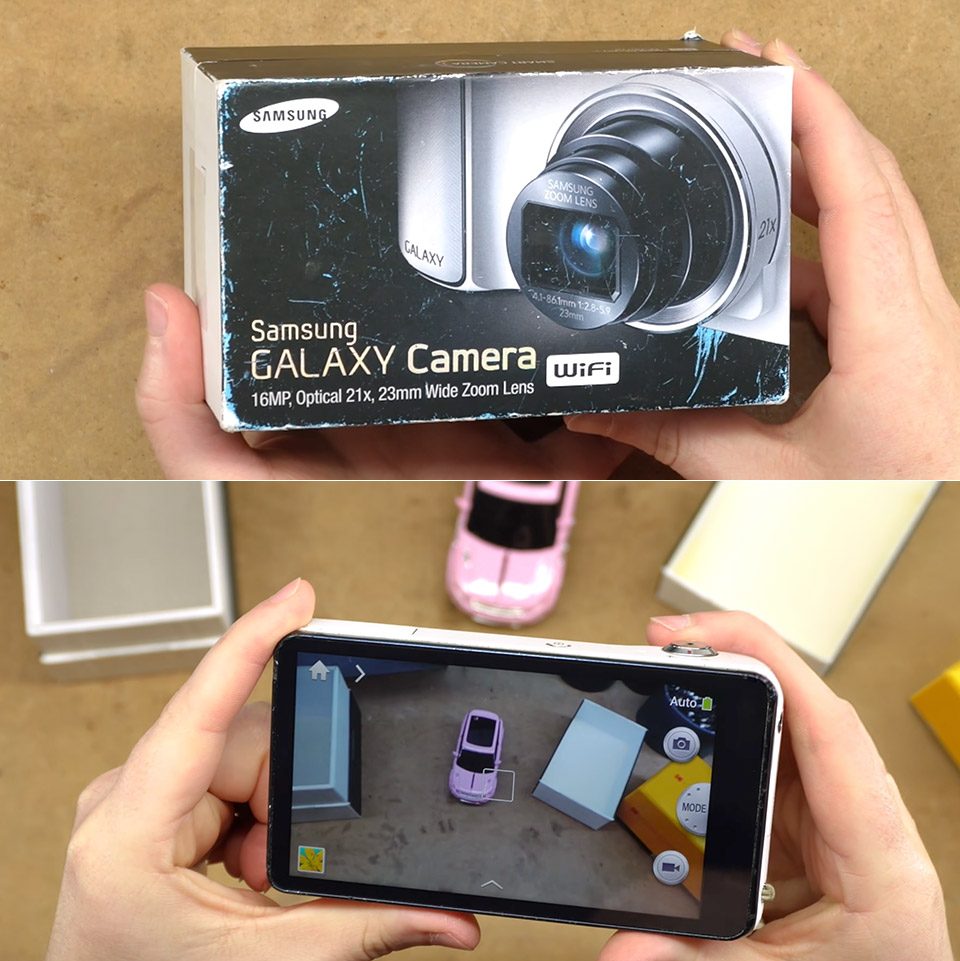
Samsung announced the Galaxy Camera in August 2012 and began shipping units that November, creating a device that looked like a compact superzoom while running the same software foundation as the Galaxy S III. Inside sat a 1.4 GHz quad-core Exynos 4412 processor, 1 GB of RAM, and Android 4.1 Jelly Bean with TouchWiz. The body measured roughly 129 by 71 by 19 millimeters and weighed about 300 grams, thicker and heavier than most point-and-shoot cameras of the era because the large 4.8-inch 1280 by 720 Super Clear LCD occupied most of the rear surface and was covered by Gorilla Glass 2.
A 21x optical zoom lens, equal to a 23-483 mm, emerges from the camera’s front and is coupled with optical image stabilization and a pop-up xenon flash. The sensor beneath the lens was a 16.3-megapixel 1/2.3-inch CMOS, a very normal size and resolution found in many tiny cameras at the time. You generally interacted with the camera via the large touch screen, which served as both a viewfinder and an editing area at once. The camera app includes manual controls for shutter speed, aperture, ISO (100-3200), white balance, and focus, and it can record 1080p video at 30 frames per second (720p at 60 fps and lower-res stuff at 120 fps for super slow-motion).
Sale

DJI Osmo Pocket 4 Standard Combo, Pocket Gimbal Vlog Camera | 1″ CMOS & 4K/240fps, 3‑Axis…
- 4K/240fps Slow-Motion Video – Osmo Pocket 4 has 1-inch CMOS sensor records up to 4K/240fps [1] for crisp slow motion and clear detail, even in low…
- Steady Footage With 3-Axis Stabilization – The mechanical gimbal keeps footage smooth while walking or running, with gimbal modes for professional…
- Always in Frame With ActiveTrack – Osmo Pocket 4 supports ActiveTrack [6] for tracking distant subjects at 4× zoom, plus Spotlight Follow and Dynamic…
Since it runs a full Android installation, you could easily download Instagram, Snapseed, Photoshop Express, and hundreds of other picture and video apps from Google Play. You could edit, play with filters, and post your photographs and videos via Wi-Fi or (if you were on a carrier version) HSPA+ or LTE, without needing to use a computer or phone first. There was a microSD card slot for expanding the limited storage, GPS, Bluetooth, micro-HDMI out, and a conventional 3.5mm headphone socket.
The image quality was comparable to other compact superzooms from 2012, but not nearly as good as the larger-sensor cameras. Reviewers complained about faint detail at longer focal lengths, noise at high ISO, and occasional over-sharpening due to processing. Also, the autofocus could hunt while shooting video, and the lens barrel was not dustproof. The battery capacity was 1650mAh, which was adequate for a few hours of shooting and light use, but it wouldn’t last all day if your phone’s data was still active. The carrier versions could accept a micro-SIM for data only, but the Galaxy Camera could not make or receive calls.
It never sold as well as Samsung’s phones or ordinary cameras, so in 2014 they released the Galaxy Camera 2, which had a bit more RAM and a larger battery. By then, smartphone cameras had advanced significantly, and most people preferred a single gadget that could do it all – calls and images in one clean package. Even said, the original Galaxy Camera demonstrated that it is possible to pack a dedicated zoom lens, a large viewing screen, and a diverse app ecosystem into a single body, even if it proved to be a little too niche for most people.
Samsung Galaxy Camera Merged Full Android Power With a Twenty One Times Optical Zoom in 2012
#Samsung #Galaxy #Camera #Merged #Full #Android #Power #Twenty #Times #Optical #Zoom