As Iran conflict enters 6th month, Saudi and Israeli leaders try to shape Trump’s decisions
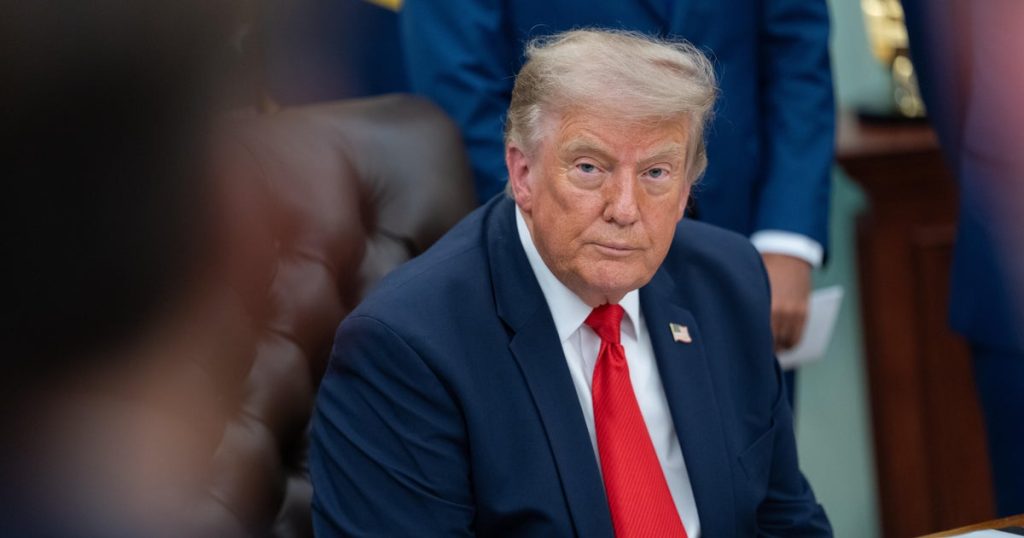
President Trump and Israeli Prime Minister Netanyahu estimated the intense part of the U.S.-Israeli war in Iran would last four to six weeks. It is now entering the sixth month without a decisive military victory or a diplomatic breakthrough.
Now, as Mr. Trump weighs his next steps and the future of roughly 50,000 U.S. troops across the Middle East, two of Washington’s closest regional partners are pressing the president with sharply different visions for how the conflict should proceed.
The president received input Wednesday from his partner in this war, Netanyahu, as well as from Saudi Defense Minister Khalid bin Salman.
During his Tuesday Oval Office meeting with Netanyahu, Israeli officials were struck by Mr. Trump’s serious and “very clinical” approach to the Iran war. A senior Israeli official shared with CBS News that Netanyahu counseled the president on three options for the war: First, an enforceable deal focused on removal of the nuclear material; second, a blockade with added economic pressure; and a third involving military strikes particularly focused on attacking land routes used for transporting supplies.
Tension with Israel spilled into public view last month when conservative members of the Netanyahu coalition criticized the JD Vance-led diplomatic deal with Iran, and Vance told an interviewer that a country of nine million people should not think it can bomb itself out of every national security threat. Trump himself voiced frustration that Netanyahu needed to take a ‘softer touch’ in dealing with Iranian proxy group Hezbollah.
The official acknowledged Netanyahu is now sensitive to being seen as pushing Mr. Trump in any direction regarding the war and described the dynamic of their relationship as one where Mr. Trump is the senior partner and Israel is the junior. Neither the White House nor the Israelis have released a readout of that meeting.
Speaking to reporters a day after the Oval Office meeting, a senior Israeli official defended Netanyahu’s original estimate to Mr. Trump of a war that would last just four to six weeks — one that the president publicly repeated at the outset of the conflict — by saying that the “tense part” was only four to six weeks long. Since U.S. combat resumed this month, Israel has stood on the sidelines, neither striking Iran nor having been attacked by it. The senior Israeli official told CBS News that if attacked, Israel would have no choice but to rejoin military operations.
Netanyahu held a follow-up meeting Wednesday with Defense Secretary Pete Hegseth and Defense Under Secretary for Policy Elbridge Colby, and met privately with U.S. envoy Steve Witkoff. He also visited with senators known to be Iran hawks, Republicans Tom Cotton, Ted Cruz, Tim Sheehy and Democrat John Fetterman.
In separate meetings with President Trump and Vice President JD Vance Wednesday, Saudi Defense Minister Prince Khalid bin Salman conveyed the Kingdom’s assessment that Iran is trying to find leverage in the conflict through escalation, and its main leverage points are through proxy forces in Yemen, the Houthis, and Iraqi militias. The White House acknowledged that Mr. Trump “had a brief drop-by meeting with the Saudi defense minister.”
The Saudis joined the United States in strikes against Iranian-backed militias in Iraq on Wednesday and bombed Houthis days earlier, in the first public engagement of any Persian Gulf nation during the war. The Kingdom described the strikes as defensive actions in response to a series of attacks on Saudi civilian infrastructure. At least 20 people, including some Iranian military advisers, were killed in the Saudi-U.S. strikes, according to the Iran-backed militia groups.
Saudi Arabia’s leaders are trying to avoid further regional escalation that would risk miscalculation or prolonging of the war. A person familiar with the Saudis’ thinking told CBS News that Crown Prince Mohammed bin Salman and his brother Khalid bin Salman have been concerned that Netanyahu, who launched the war in February alongside the U.S., is pushing for further escalation.
Prince Khalid was originally supposed to visit Washington last week but was delayed due to recent strikes, according to a person with knowledge of his plans.
The Kingdom struck the Iran-backed Houthis in Yemen last week after militants fired missiles at a Saudi oil tanker in the Red Sea, after declaring a maritime blockade of Saudi Arabia. CBS News tracked at least five vessels early last week, including several laden with Saudi crude oil, making U-turns before reaching the Bab el-Mandeb Strait soon after the Houthis had vowed to block Saudi-linked ships.
In the meantime, diplomacy with Iran remains unproductive. Iran rejected an initial proposal from Oman to reopen the Strait of Hormuz. Witkoff and Mr. Trump’s son-in-law, Jared Kushner, as well as Vance, had thought they had negotiated a diplomatic agreement to do so, which was announced in late June as a memorandum of understanding. That truce lasted less than three weeks.
Pressed by reporters as to whether Israel has determined there is anyone worth negotiating with in Iran, a senior Israeli official offered only one name — Foreign Minister Abbas Aragchi — and characterized him as a realist, but not a moderate. The senior Israeli official acknowledged that economic sanctions and blockades could be effective in persuading more pragmatic Iranian officials to pursue diplomacy.
Netanyahu still believes that regime change is necessary and hopes to achieve that goal by laying the groundwork for an uprising. Mr. Trump has repeatedly said he favors negotiating with the regime, which would arguably extend a lifeline to those the Israelis hope to extract.
U.S. intelligence assesses that further bombing of Iran will not dislodge the IRGC controlled regime, two U.S. officials said.
The United Arab Emirates had also carried out dozens of airstrikes in Iran this spring but has not publicly advertised it. Gulf allies who house U.S. troops, including Kuwait and Bahrain, have fielded near daily incoming drones and missiles, some of them launched from Iran and some from Iraqi territory. Kuwait’s ambassador to the U.S. Sheikha al Zain al Sabah issued an on the record denial that the country had participated in strikes on Iran after the Wall Street Journal reported it last week.
The Strait of Hormuz remains congested by Iranian threats, and Iran’s enriched nuclear material remains under Iranian control — albeit under monitoring by U.S. and Israeli intelligence. The Pentagon has requested $67 billion in funding for the war on an emergency basis to pay for troops and restocking of munitions.
As Iran conflict enters 6th month, Saudi and Israeli leaders try to shape Trump’s decisions
#Iran #conflict #enters #6th #month #Saudi #Israeli #leaders #shape #Trumps #decisions