Army looking into using 2 U.S. ranges for testing to mimic electronic jamming seen in Ukraine
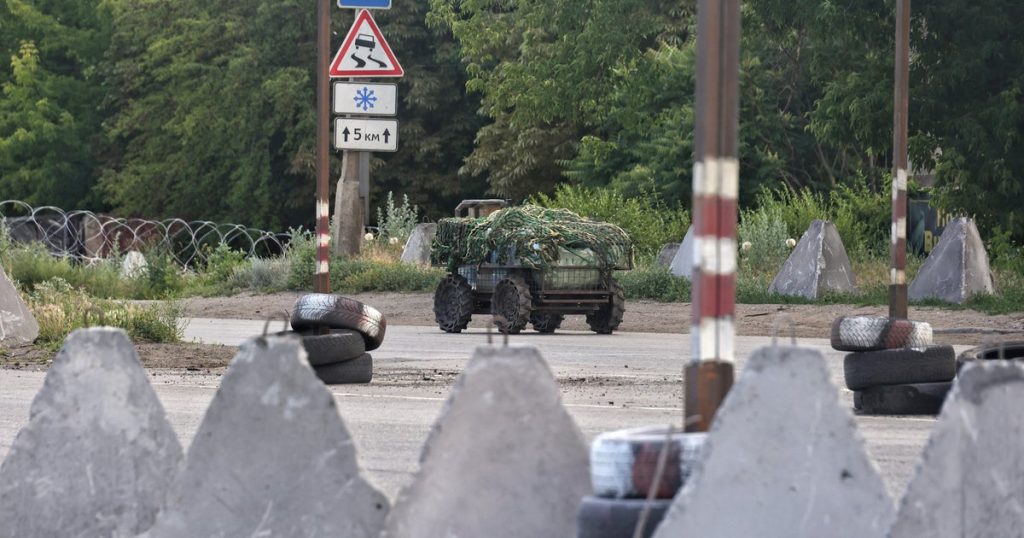
The Army in the next four to six weeks plans to set up at least two domestic ranges that mimic realistic conditions on Ukraine battlefields, according to Army Secretary Dan Driscoll.
“You can have a kind of electronic warfare and all of the contested environment created, and you can have drone manufacturers and counter-drone tool-builders engaging together,” Driscoll told reporters Tuesday. “Then, we also want soldiers to be able to go there, so that they can strengthen their skills and work hand-in-hand with developers.”
Driscoll said there are already places in the U.S. where the Army can test safely, and separately, the Army is looking at a global range outside the U.S. to do “much more aggressive testing,” including with hypersonics. When asked, Driscoll declined to say where these ranges would be until planning is farther along.
At least some of the current counter-drone training for soldiers, like one CBS News saw in April, does not include electronic jamming — in part because the U.S. restricts jamming domestically.
Driscoll made the comments while attending an industry day the Army held to talk to companies about the Pentagon’s push for more systems to intercept drones or missiles.
Dwayne Hayes, an official from the Army’s Strategic Threats Office, told participants that Russia is producing about 3,000 to 5,000 one-way attack drones, like Shaheds, per month and roughly 600,000 per month of the smaller first-person-view drones. Faced with that threat, Ukraine produces about 30,000 interceptor drones per month, according to Hayes.
Hayes said the U.S. is “really good” at producing “exquisite” munitions — the more expensive, advanced and technical weapons like Patriot or THAAD interceptor missiles — but also needs to make interceptors that are cheap enough to be expendable in a “brutal war of attrition,” like the one in Ukraine.
The Iran war has highlighted vulnerabilities in the defense industry, particularly in speed and cost of production. President Trump met with major defense companies earlier this year and is expected to meet again with them this week to press them for faster production.
Some companies expected to attend — like Lockheed Martin, Boeing and L3Harris — produce parts for more exquisite munitions, like the Patriot interceptor missiles that can each cost $4 million to $5 million.
At the same time, the Army is soliciting information from a broader array of companies in the next few months for proposals on interceptors that would cost less.
“This is not intended to replace the solutions that we have — they’re incredible,” Driscoll said of the exquisite munitions. He told the industry-day participants, “They’ve been described as the ‘Ferrari’ of products, and it is, but we need some other things to supplement those products.”
Army looking into using 2 U.S. ranges for testing to mimic electronic jamming seen in Ukraine
#Army #ranges #testing #mimic #electronic #jamming #Ukraine