‘I survived being shot in face but injuries were so grim friends couldn’t look at me’
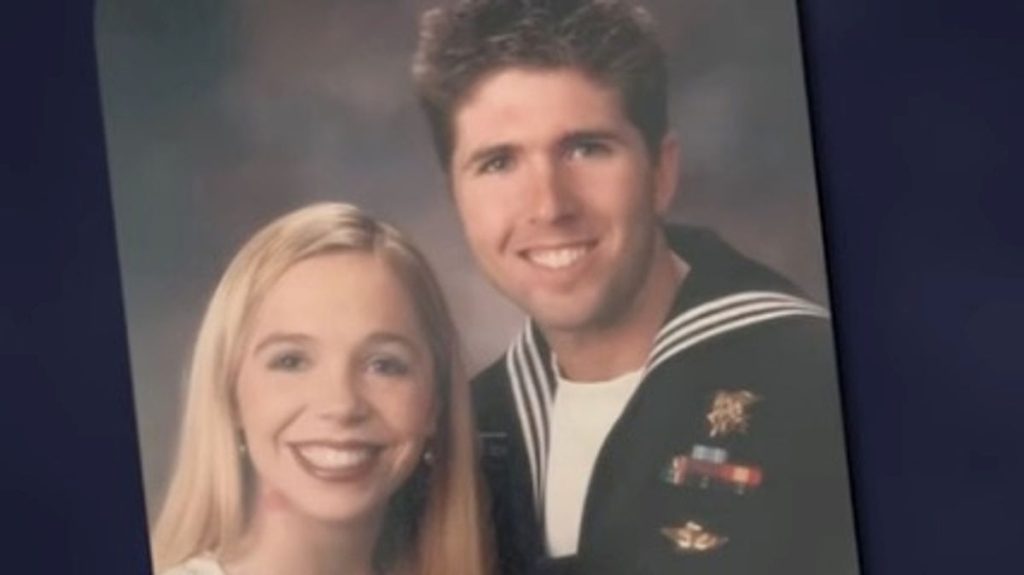
An Iraqi bullet brought an unwelcome end to Jason Redman’s US Navy Seals career, and almost ended his life, but he defiantly responded to any expressions of pity

Jason Redman(Image: YouTube/Ed Mylett)
A former US Navy SEAL whose face was partially “vaporised” when he was struck by a burst of machine-gun fire has told how he managed to fight his way back to health after his squad-mates had assumed he was dead.
Jason Redman was on a mission to capture a “high-value Al-Qaeda operative” in Fallujah, Iraq, when his squad came under heavy fire: “I caught a round in the face. It hit me right in front of my ear, travelled through my face, took off my nose, blew out my right cheekbone, broke all the bones above my eye, vaporised my orbital floor, broke the head of my jaw, shattered my jaw to my chin and knocked me out,” he said.
Speaking on the LadBible Stories podcast, Jason added: “The guys saw me fall and thought I was dead.”
In the chaos of the firefight, which lasted for more than 40 minutes, Jason’s comrades didn’t have time to check on him. “I remember at some point in the gunfight, after I came to, calling out to my team lead, Jay, and saying, ‘Jay, how long to the medevac?’ because I knew I was losing all kinds of blood. And he was like, ‘Red, you’re still alive?’”
It would be a further 15 minutes before medical help arrived, but Jason managed to cling on to life despite his grievous injuries. Apart from the bullet that had torn through his face, he had six other wounds from the burst of machine-gun fire that had raked across his entire body.
Jason was given emergency treatment in Baghdad before being transferred to the National Naval Medical Center in Bethesda, Maryland. During the course of some 37 surgeries, he was given massive blood transfusions and some 1,200 stitches, 200 staples, 15 skin grafts, as well as an emergency tracheotomy.
His surprise at still being alive after what he had gone through soon turned to horror as the full extent of his injuries dawned on him. “I felt like a monster. I hadn’t looked at myself in a mirror. It would be, I don’t know, probably at least 10 days later that I finally saw myself for the first time,” he recalled.
It was the expressions of pity from some of his visitors that hardened Jason’s resolve. “I’ll never forget, we had some people who had come into my room. I think they had been there in the hospital and they were just overwhelmed.
“They were talking to themselves off to the side while the nurse was working on me. I could hear them saying, ‘What a, what a shame. This is so sad.’”
The “negative mindset” of their sympathy made Jason even more determined to recover. He wrote a sign which he asked his wife to pin to the door of his hospital room. It read: “Attention to all who enter here. If you are coming into this room with sorrow or to feel sorry for my wounds, go elsewhere.
“The wounds I received I got in a job I love, doing it for people I love, supporting the freedom of a country I deeply love. I am incredibly tough and will make a full recovery. What is full? That is the absolute utmost physically my body has the ability to recover. Then I will push that about 20 percent further through sheer mental tenacity.
“This room you are about to enter is a room of fun, optimism, and intense rapid regrowth. If you are not prepared for that, go elsewhere.”
Despite almost losing one arm after a bullet passed through his elbow, Jason’s determination saw him return to the US Navy, although not in quite the same role as he had initially hoped. “For a while my goal was to get back operational. I wanted to be an operational SEAL. I wanted to get back to that,” he said.
“But it would take four years and almost 40 surgeries to get put back together. Finally there was a doctor at Duke University in North Carolina who was a renowned hand and arm surgeon. And he just said, ‘Listen to me. You have an amazing outcome for what happened to you. You shouldn’t have an arm. Your nerves are regenerating, you’re not in a massive amount of pain.’”
However, the doctor added that if Jason continued in his quest to return to active duty, it would “not go well.”
Jason recalled: “He said, ‘Think about your quality of life and your future with your kids and all this.’
“And I remember leaving. I had driven down there by myself, and I remember leaving – it was late in the day and the sun was setting. I was disappointed, but there was also a sense of peace. It felt like the end of one chapter and the beginning of another.”
After 21 years in the US Navy, Jason retired in 2013, six years after the firefight that came close to killing him. He has since founded the non-profit Wounded Wear, which provides specialised clothing for injured veterans, and has written two books. He also tours the US, giving talks with a message of hope and resilience for anyone who has suffered a life-changing injury.