Six countries threatened by ‘Doomsday Glacier’ as expert warns of collapse ‘in months’
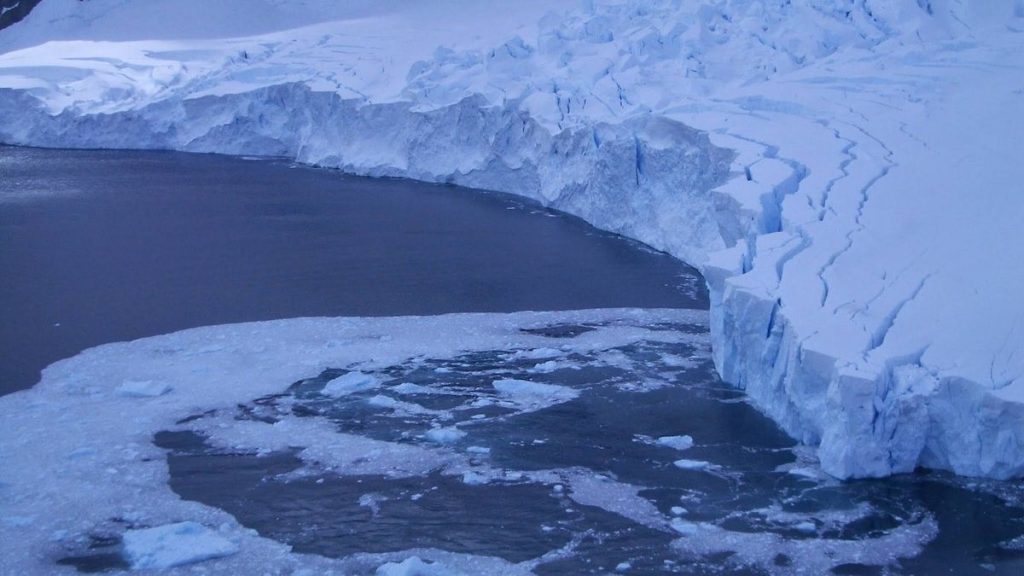
The Thwaites Glacier, nicknamed the ‘Doomsday Glacier’, could trigger catastrophic sea level rise of up to three metres — and scientists warn the ice shelf is already tearing apart

As more Antarctic ice melts, the threat multiplies(Image: Lauren Jones / FOAP via Getty Images)
The planet’s widest glacier is causing serious alarm amongst climate scientists. The enormous Thwaites Glacier, located on Antarctica’s Walgreen coast, is under intense scrutiny due to its potential to drastically impact global sea levels. Known as the “Doomsday Glacier”, it contains sufficient ice to elevate sea levels by more than two feet should it melt entirely.
Even more alarming, the domino effects from Thwaites Glacier’s disappearance could spark a disastrous collapse throughout the region – posing the threat of sea level increases reaching up to three metres.
Antarctica contains roughly 90% of Earth’s ice, meaning developments there will significantly influence how rapidly global sea levels climb. As the glacier’s base is worn away by relatively warm seawater, ice flows into the surrounding ocean at an accelerating pace.
With climate change advancing, numerous major coastal cities face increasing danger from more regular and severe flooding. A significant ice shelf forming part of the 74,000-square-mile glacier is “very likely” to fragment this year, according to Robert Larter, a marine geophysicist with the British Antarctic Survey.
He explained to Live Science: “The last bit of ice shelf in front of the glacier is poised to disintegrate. We don’t know quite how this ice shelf is going to break up, but it’s definitely going to go. It’s tearing away from the glacier at the moment, and its internal structure is getting more and more fragile.”
Larter explains that certain regions across the globe will witness dramatic transformations. He went on: “You don’t need a lot of sea level rise, just a metre or two, to turn your once-a-century coastal flooding event into a once-a-decade or even an annual event”.
Here, we examine some of the nations that could face the greatest impact.
The UK
Among the countries most vulnerable to rising sea levels is the United Kingdom. Climate scientists from nonprofit organisation Climate Central caution that vast stretches of the Lincolnshire and Norfolk coastlines are expected to be submerged by 2050 – merely 24 years from now – while seaside destinations such as Weston-super-Mare in Somerset and Eastbourne in East Sussex also face danger.
A Climate Central projection, illustrating the probable consequences of the anticipated sea-level increase, depicts the Thames riverbanks flooded as far inland as Surbiton, with the waterway predicted to burst its banks in locations including Canary Wharf, Greenwich and Westminster.
As the Bristol Channel widens, sections of South Wales might also experience severe flooding. Nationwide, more than 1.3 million residential and commercial properties in Britain could face flood risk by 2050, intelligence firm Gamma has revealed.
The Netherlands
Climate Central’s data also reveals that our neighbours across the North Sea face enormous risk from rising sea levels. More than half of the Netherlands is susceptible to flooding, with approximately 26% of the nation situated below sea level. Climate-induced ice melt and land subsidence mean the North Sea is accelerating in its ascent.
Heavily populated economic centres like Amsterdam, Rotterdam, and The Hague sit predominantly below sea level and rely extensively on pumping stations to keep their streets dry.
Existing flood defences can cope with a sea level rise of up to one metre, the Netherlands Delta Commissioner estimates. Therefore, should the glacier collapse and the resulting effect of a 3-metre rise in sea levels materialise, it could prove catastrophic.
While the Dutch are accomplished experts at land reclamation, the damaging consequences of sea level rise stretch far beyond mere flooding. As more salt water encroaches on lakes and rivers, freshwater supplies required for agriculture, nature, and drinking water can become compromised.
The USA
The catastrophic impact of Hurricane Katrina demonstrated how even temporary flooding can cause enormous destruction in low-lying regions. A recent report warns that the evacuation of New Orleans must commence this year, as the historic Louisiana city has reached a “point of no return.”
According to the report, published in scientific journal Nature Sustainability, the New Orleans region is now the “most physically vulnerable coastal zone in the world.” Jesse Keenan, a climate adaptation specialist at Tulane University and one of the paper’s five co-authors, stated bluntly: “In paleo-climate terms, New Orleans is gone; the question is how long it has.
“Even if you stopped climate change today, New Orleans’s days are still numbered. It will be surrounded by open water, and you can’t keep an island situated below sea level afloat. There’s no amount of money that can do that.”
Miami, too, faces danger. Sonia Brubaker, chief resilience officer for the City of Miami, describes the Florida holiday destination as “ground zero for climate change”.
Ironically, despite Miami being amongst the most vulnerable cities to sea-level rise, it’s experiencing a construction surge. “We have a lot more people moving into risky areas than moving out, which is kind of counterintuitive,” said Andrew Rumbach, a senior fellow at the Urban Institute, told CNBC.
Bangladesh
Nearly 70% of Bangladesh lies less than one metre above sea level. The nation has existed in its current form for just 55 years but has already endured more than its fair share of natural catastrophes. In September 1998, Bangladesh witnessed the worst flooding in modern history, after which two-thirds of the country remained submerged, alongside a death toll of 1,000. In 2007, further flooding resulted in approximately five million people being forced from their homes, with fatalities numbering around 500. Experts predict that by 2050, a three-foot surge in sea levels will submerge roughly 20% of the territory, forcing over 30 million inhabitants to relocate.
Tuvalu and Maldives
Numerous smaller nations face the threat of complete obliteration from the map. The Maldives, for instance, is renowned as a tropical getaway but also holds the distinction of being the planet’s lowest-elevation country. With an average height of merely 1.5 metres above sea level, even the most cautious projections for rising waters could leave this Indian Ocean holiday destination over 90% submerged by 2100.
Climate change is also triggering dramatic shifts in meteorological conditions, resulting in increasingly frequent and violent storms across the Maldives. In recent years, extreme weather phenomena including torrential downpours, droughts, floods and powerful gales have grown not only more common but considerably more devastating.
Across the Pacific, climate change poses an especially grave threat to the long-term viability of Tuvalu, an island nation spanning just 26 square kilometres.
Recent projections suggest that peak tides could routinely inundate 50% of the capital Funafuti’s landmass by the 2050s, potentially reaching 95% by 2100.
In 2022, Simon Kofe, the small nation’s Minister for Justice, Communication & Foreign Affairs, declared that in reaction to increasing sea levels and the apparent shortcomings by the international community to tackle climate change, the country would be “uploading itself to the internet” in a bid to safeguard itself and enable it to operate as a nation even should it become entirely submerged.