TeCoBot Robots Link Up, Bend, and Collapse Into Shapes for Complex Work
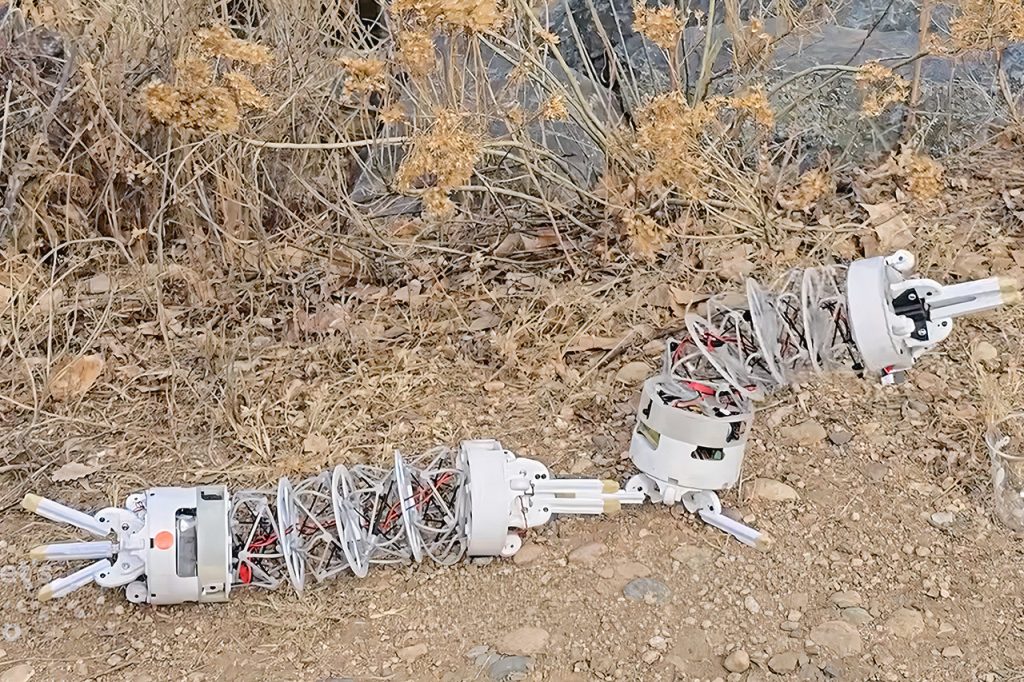
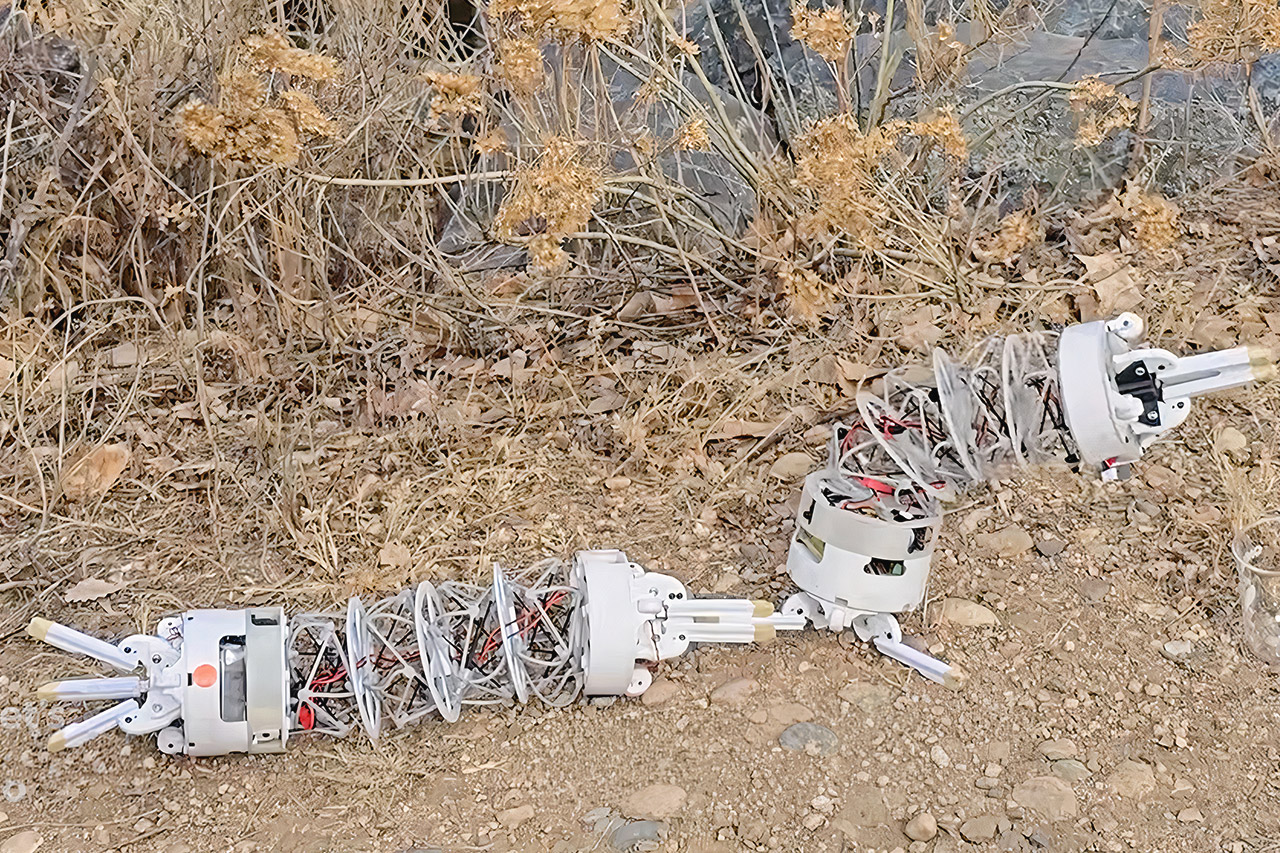
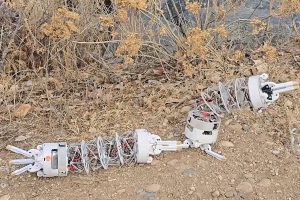
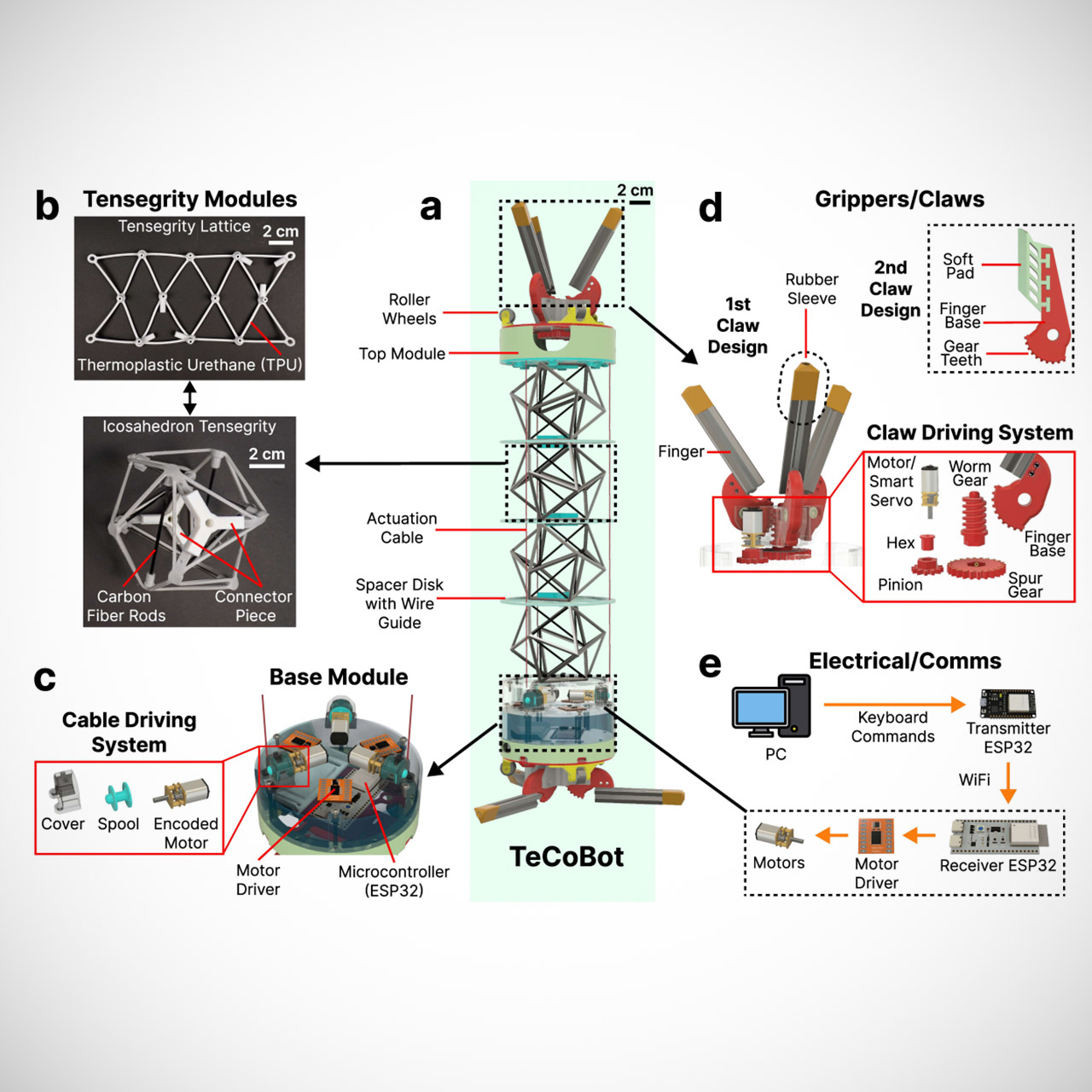
Researchers at Colorado State University’s Adaptive Robotics Lab have built TeCoBot, a robot that bends, shortens, and joins with others through claws at each end. A single unit stands 587 millimeters long and 110 millimeters across while weighing about 600 grams without batteries.
The body is made up of four stacked pieces, each of which holds six lightweight carbon fiber rods within a continuous stretchable lattice printed in thermoplastic polyurethane. Three wires made of braided fishing line run throughout the length and connect to miniature motors at the base. Pulling all three cables shortens the body by up to 260 millimeters in a straight line. Uneven pulls bend the body in any direction, with each portion contributing around 60 degrees of curvature.

LEGO Disney & Pixar WALL-E & EVE Building Set for Adults, Ages 18+ – Home Office, Book Shelf, or Room…
- LEGO SET FOR ADULTS – The WALL-E and EVE (43279) building set offers adults 18 years old and up an immersive construction challenge featuring…
- 4 DISNEY PIXAR CHARACTERS – Builders can create iconic robots WALL-E, EVE, M-O and Hal from the hit movie—each with authentic functionality like…
- MINDFUL BUILDING EXPERIENCE – This detailed construction set lets builders practice advanced construction techniques for an immersive and relaxing…
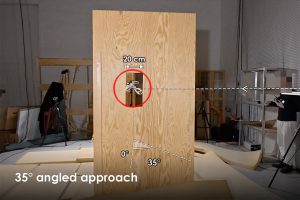
A single TeCoBot manages its own business with no human intervention required. It has replaceable claws on both ends, which come with either rubber sleeves for a solid hard grip or softer pads for when you need to be a little more careful. You can have one bot pick up a grape and place it in a jar with a bit of shortening and some sideways bending, which is rather astounding. Another will dangle from one claw, while the second can easily lift a 2.5-liter water bottle.
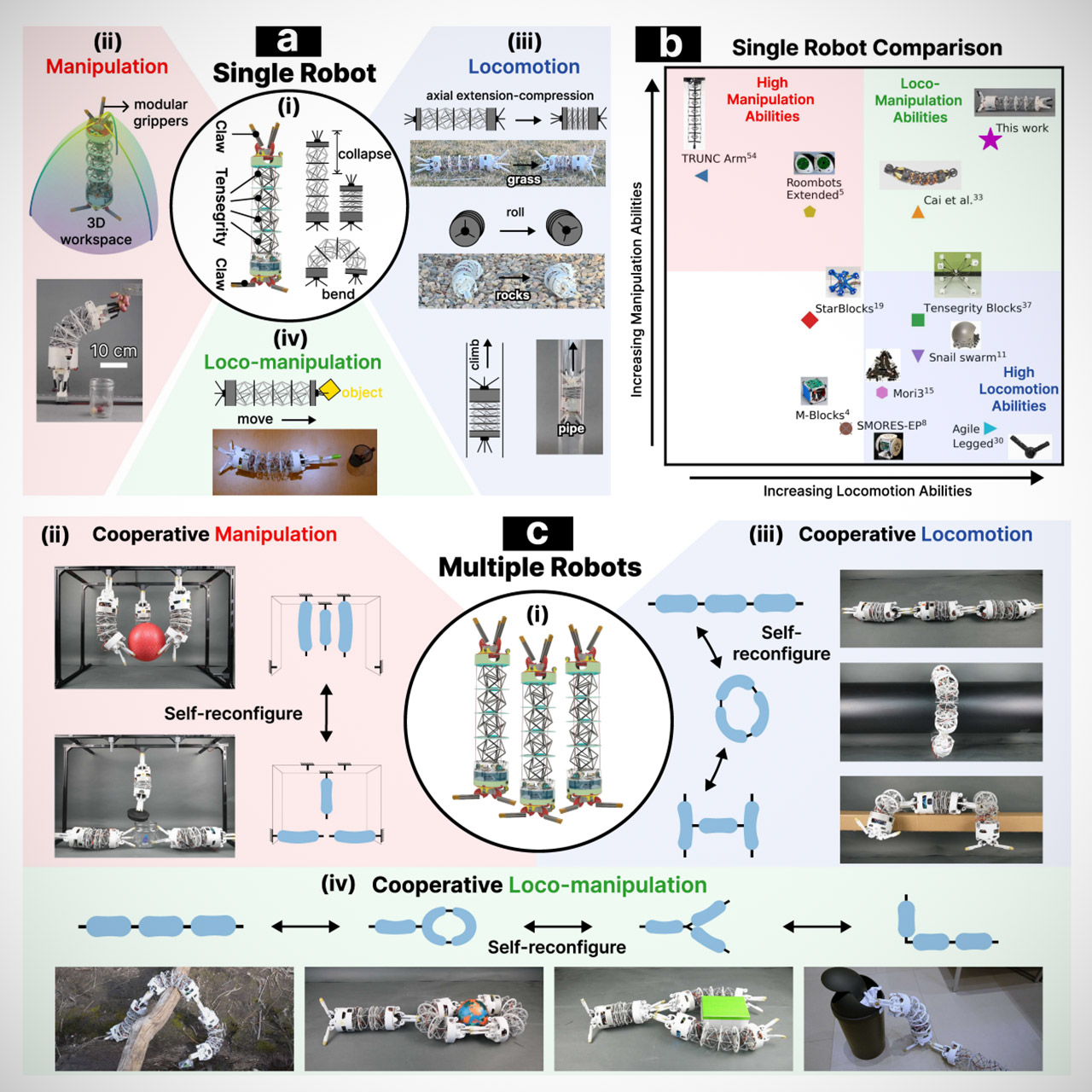
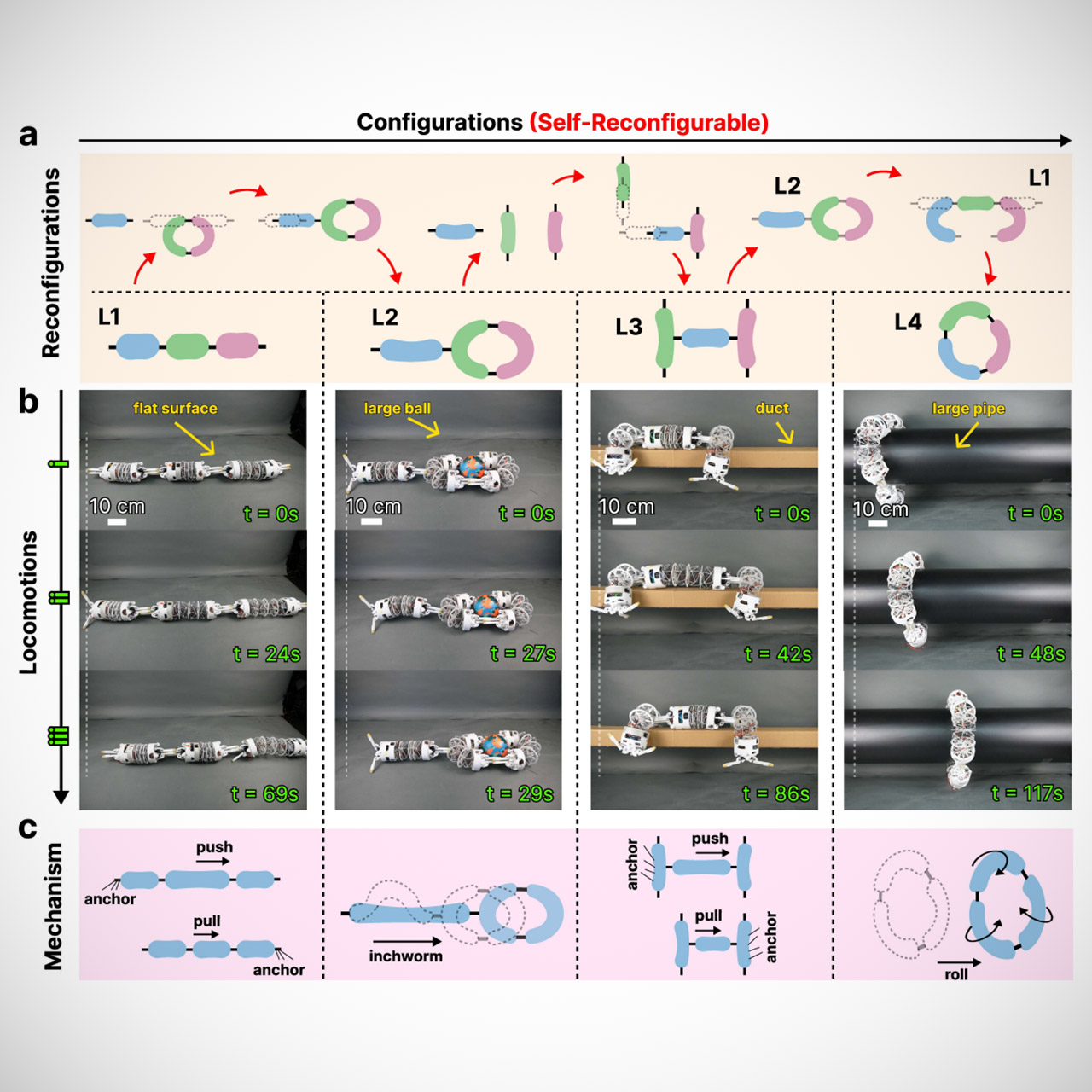
The movement options available are varied and pretty cool, including the inchworm gait in which it extends and compresses its body, crawling with the claws as an anchor, rolling along at about 30 millimeters per second on smooth wood (which is actually quite quick considering), and turning in place as well as climbing up inside a pipe. When testing the robots outside, they tried eight various surfaces, including grass, gravel, boulders, soil, and hay, and the rolling bit performed well on uneven terrain. One of the advantages of the compliant body design is that when the robot bumps into something, it just yields, eliminating the need for frequent computer adjustments to deal with each and every bump.
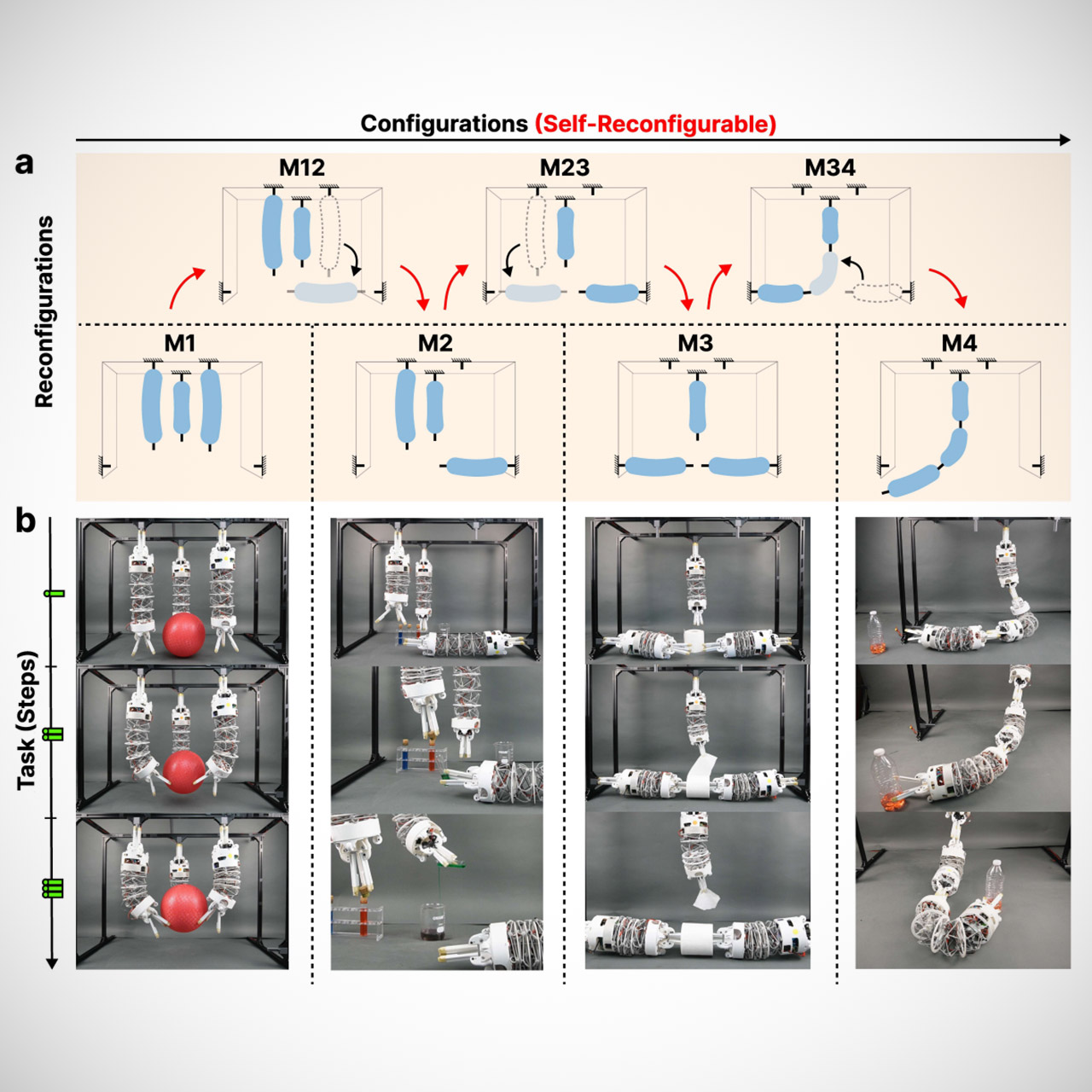
When several TeCoBots come together, the claws on their ends interlock, similar to crossed fingers, and can hold each other in place with up to 42.9 newtons of force. You may use three of them to construct a ring and hoist a 200-millimeter ball, a loop to surround an object, or an H-shaped walker to bridge gaps. If you have four units, you can form lizard-like setups or closed loops to navigate pipelines and climb up ducts. It’s very fascinating to witness them in action, such as three robots working together to remove a cork from one test tube and then pour liquid into another, unrolling a piece of tissue paper, or even reaching out and grabbing something from a distance.

One of the sequences they’ve been working on is a table-cleaning sequence in which one unit climbs up onto the surface, collects the papers, and then passes them down to the next unit in line, who transports them to a bin. You may also watch some outdoor videos of them selecting plant samples and placing them in beakers while avoiding branches and logs. Then there’s a movie of autonomous docking, in which two robots find each other and attach without human intervention.
It appears that the TeCoBot has some real potential. For example, on a manufacturing line, you could reconfigure them to do different assembly steps, on a search-and-rescue mission in a collapsed space where you need to get in there and retrieve stuff, or even in space where you need lightweight robots that can handle all sorts of unpredictable surfaces and objects.
Because the design scales easily, you may expand the reach simply by adding more sections without having to upgrade to stronger motors, as the measured forces for shortening and bending remain relatively consistent whether you have one or four parts. The control mechanism is based on wireless commands sent to the onboard ESP32 module, and there’s even a public web interface that allows you to mess with wires, resize frames, and explore all of the potential configurations, ranging from a single unit to six linked robots in a larger structure. All of this was first published in Nature Machine Intelligence in 2026, and the code and models are all available for exploration online.
TeCoBot Robots Link Up, Bend, and Collapse Into Shapes for Complex Work
#TeCoBot #Robots #Link #Bend #Collapse #Shapes #Complex #Work