This Crazy $55,000 RC F-14 Tomcat Flies With Real Swing Wings, Turbine Power, and Fighter Jet Presence
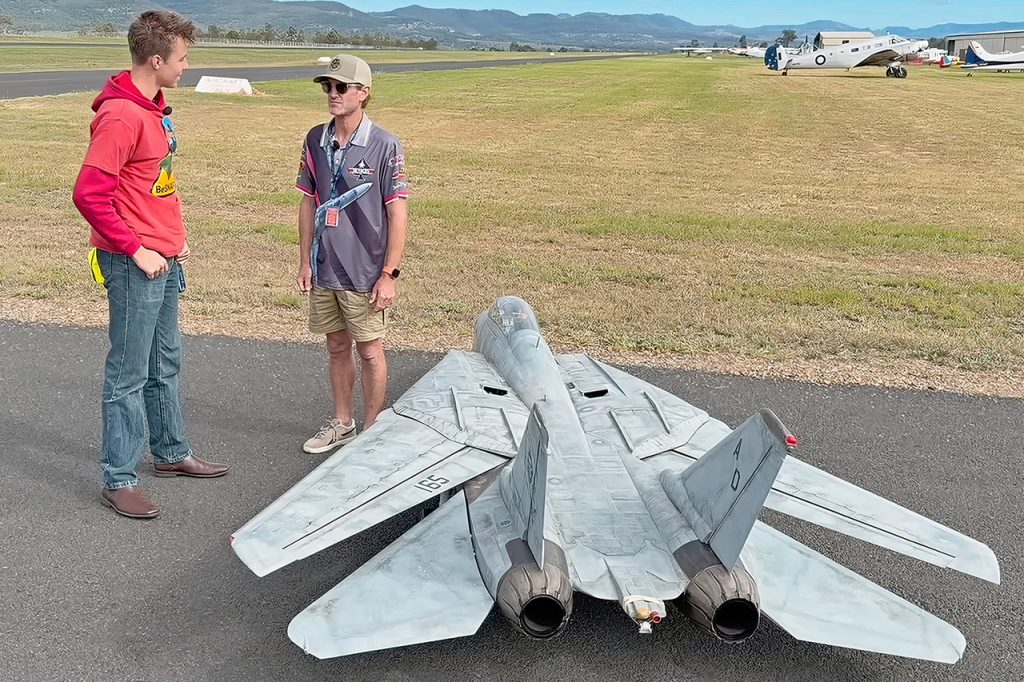
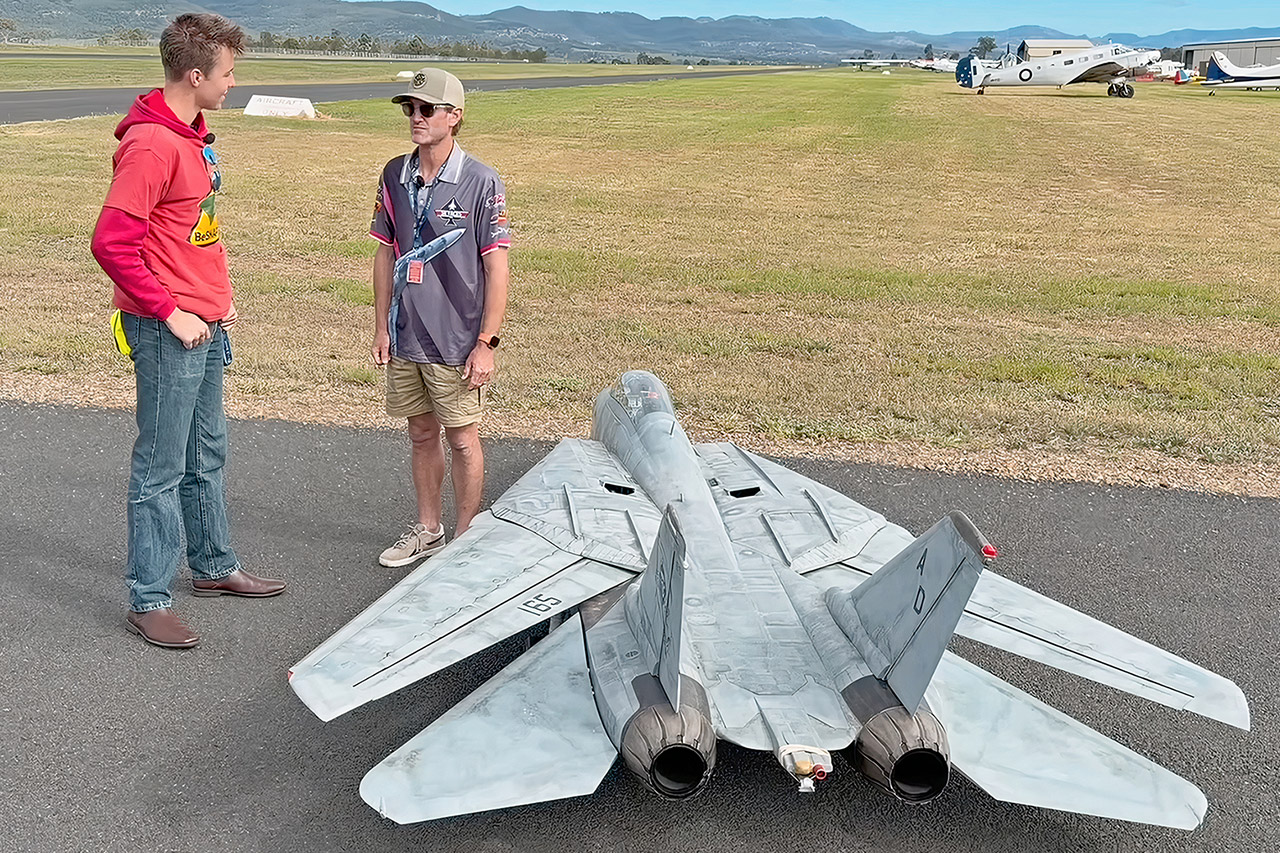
Remote control aviation often centers on small drones that anyone can pick up and fly in a park. Levi Wagner of Team Sky Aces RC took a completely different path. He built a machine that sits in another category entirely. His remote-controlled F-14 Tomcat fighter jet measures 3.7 meters (12 feet) long. Empty it weighs 48 kilograms (106 pounds), but load it with 12 liters of jet fuel plus smoke oil and the weight rises sharply.
The airframe began as a single massive composite shell built by a specialized manufacturer. Wagner spent several years, approximately two years, completing all of the small details that make a massive model into something that genuinely looks the part. Then he painted in layers, hoping to get a precise effect with the Compass Ghost Grey colors. He brought it to life with rivets, panel lines, oil stains, and even some grime. The weathering mimicked the appearance of a real-life F-14 Tomcat that flew demo missions before retiring in 2004. Moving pilot figures sit in the cockpit, scale landing gear neatly retracts into the wells, and a smoke system generates vapor when necessary.
Sale

DJI Neo, Mini Drone with 4K UHD Camera for Adults, 135g Self Flying Drone that Follows You, Palm Takeoff…
- Due to platform compatibility issue, the DJI Fly app has been removed from Google Play. DJI Neo must be activated in the DJI Fly App, to ensure a…
- Lightweight and Regulation Friendly – At just 135g, this drone with camera for adults 4K may be even lighter than your phone and does not require FAA…
- Palm Takeoff & Landing, Go Controller-Free [1] – Neo takes off from your hand with just a push of a button. The safe and easy operation of this drone…
This F-14’s standout feature is its variable-sweep wing configuration, which is roughly identical to that of its real-life counterpart. The big difference is what this means for low-speed handling and high-speed performance. Wagner’s model has wings that slide back when flying fast and forward when slowing down or landing. Far from being just cosmetic, pilots describe the jet’s experience as having two completely different planes depending on where the wings are placed. The flaps function perfectly while the wings are in the forward position, however they cannot be used when the wings are in the back position because the airflow would damage them.
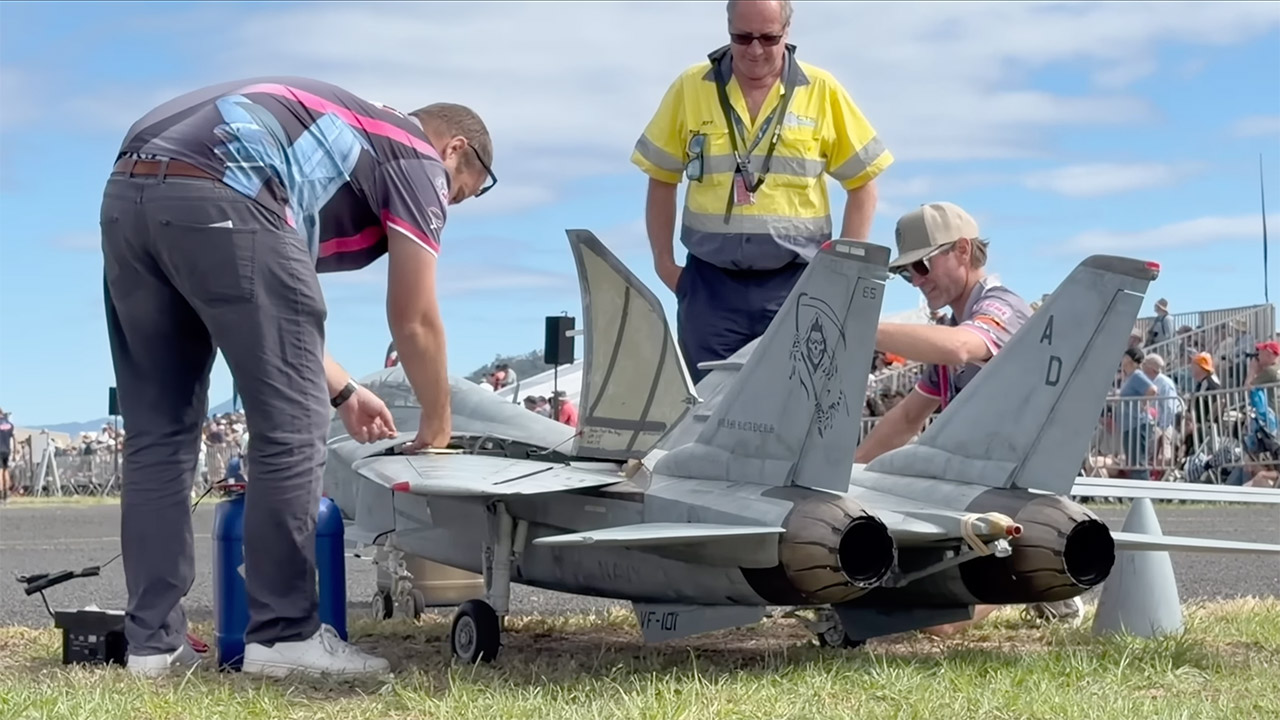
Real jet turbines generate power by burning jet fuel. This simply means that throttle response has the same lag as full-size turbine engines. It’ll do around 350 km/h, thanks in part to those big intakes, though they can add a bit of drag depending on how the jet is flown. Landings are on the fast side for RC, and the aircraft’s weight means it carries a lot of energy right through the approach.
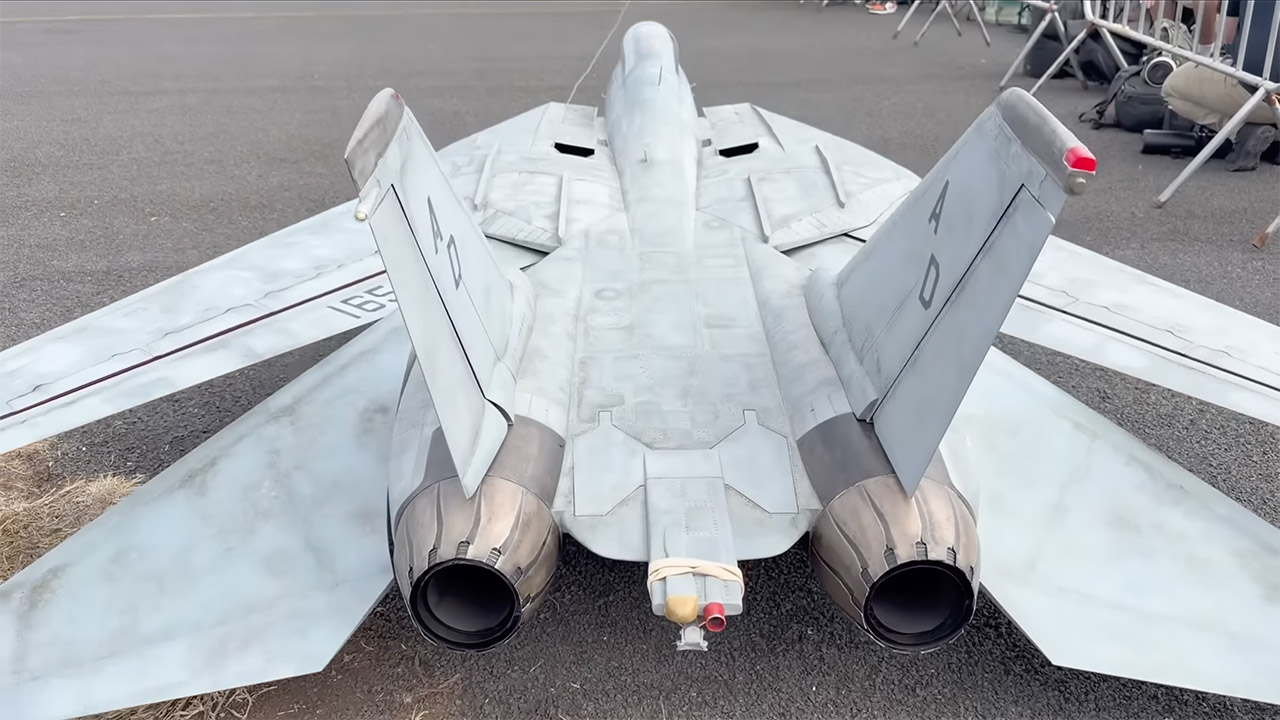
Wagner flew the aircraft on full display at the Warbirds Over Scone airshow in Australia. The routine included a long takeoff roll, mid-air wing sweeps, high-speed runs, and a precision landing. The entire thing was uncannily similar to real-life footage of actual Tomcats, from the sound to the overall mass, the way the wings moved, and the way the aircraft simply settled in on final.
This Crazy $55,000 RC F-14 Tomcat Flies With Real Swing Wings, Turbine Power, and Fighter Jet Presence
#Crazy #F14 #Tomcat #Flies #Real #Swing #Wings #Turbine #Power #Fighter #Jet #Presence