Rare ‘cannibal’ solar storm to hit Earth and spark Northern Lights spectacle
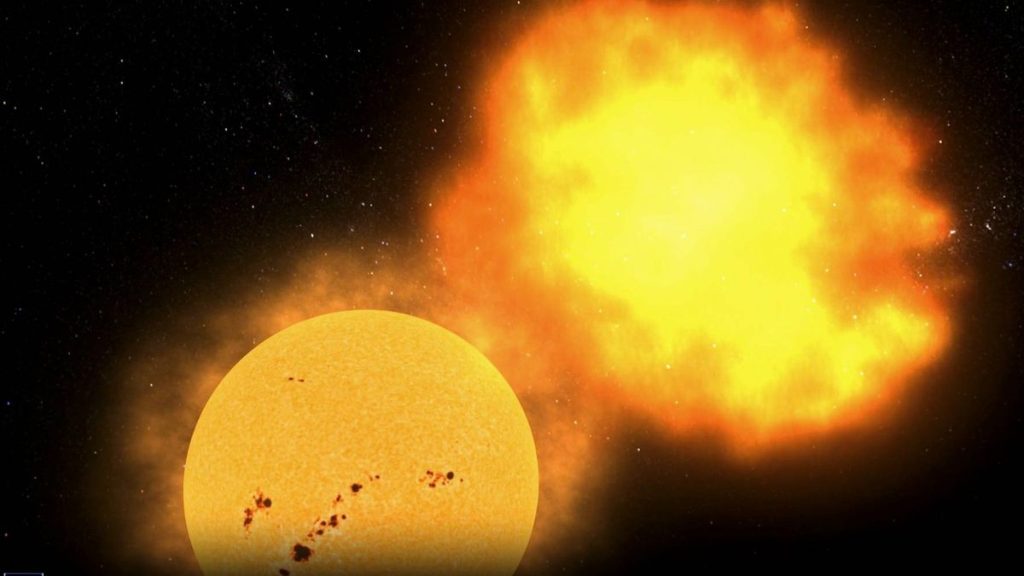
A powerful cannibal solar storm is set to hit Earth tonight after a series of solar eruptions from the sun’s surface triggered a geomagnetic storm, and aurora borealis could be visible much farther south than usual across parts of Europe and the US

A backwards sunspot hurled a merged plasma cloud toward Earth(Image: -)
Stargazers might witness a spectacular display of the Northern Lights as a mighty solar storm hurtles towards Earth, driving auroras into areas that rarely see them.
Scientists say the phenomenon could be visible much further south than typical across sections of Europe and the United States following a massive cloud of charged solar particles that created an extraordinary “cannibal” storm in space.
The occurrence started on June 2 when sunspot 4455, an unstable area on the sun’s surface, grew progressively more volatile. The disruption triggered a series of intense X-class solar flares, among the most powerful types of solar explosions on record.
Simultaneously, the sun launched multiple coronal mass ejections, termed CMEs, into space. These vast clouds of magnetised plasma can weigh billions of tonnes and hurtle at velocities reaching 1,200 miles per second.
One of the subsequent eruptions sped up dramatically and overtook an earlier, more sluggish CME. The quicker cloud subsequently combined with the first, forming what researchers call a cannibal CME,
NASA scientists report that these mergers can produce what are termed “complex ejecta”, twisted magnetic formations capable of transporting considerably more energy than a typical solar blast.
When these amplified plasma clouds strike Earth’s magnetic field, they can spark more intense and prolonged geomagnetic storms. Experts have pinpointed sunspot 4455 as the origin of the activity. This region is categorised as an “anti-Hale” sunspot, a comparatively rare variety featuring magnetic polarity that’s the reverse of what’s normally seen.
Scientists calculate that less than one in 10 sunspots display this inverted setup. The peculiar magnetic structure can render such areas especially volatile, boosting the chances of regular and intense outbursts.
Weather specialists anticipate the combined solar storm will reach Earth late on June 4 or in the early morning of June 5. The US National Oceanic and Atmospheric Administration has issued an alert for a powerful G3 geomagnetic storm and cautioned that conditions might escalate to a severe G4 incident.
The increased solar behaviour could generate exceptionally brilliant auroras as electrically charged particles collide with gases in Earth’s upper atmosphere. Oxygen and nitrogen become excited throughout this process, producing the spectacular light shows linked with the aurora borealis.
Due to the force of the approaching storm, meteorologists believe the Northern Lights could be seen much further south than usual, offering countless additional people the opportunity to observe this spectacle.
There’s a slight chance of sightings across central England and Wales, too, where clearer skies are expected.
The Northern Lights may also be seen on Friday night, although more cloud and rain moving in from the southwest may limit any opportunity to see the aurora tomorrow.
The Met Office believes that various ejections from multiple solar flares may combine, before giving Earth a “glancing blow” on Friday.
Anyone hoping to spot them should look for dark spots away from city light pollution and monitor local aurora predictions for the most current viewing information. While the storm might create breathtaking displays in the sky above, specialists warn it could also lead to minor technological disruptions. Possible consequences include brief radio interference and heightened atmospheric resistance affecting orbiting satellites.
Nevertheless, researchers emphasise that the geomagnetic storm isn’t anticipated to present any threat to individuals on Earth or to ground-based infrastructure.