Hubble Opens a Fresh Window on Galaxy Cluster MACS J1141.6-1905
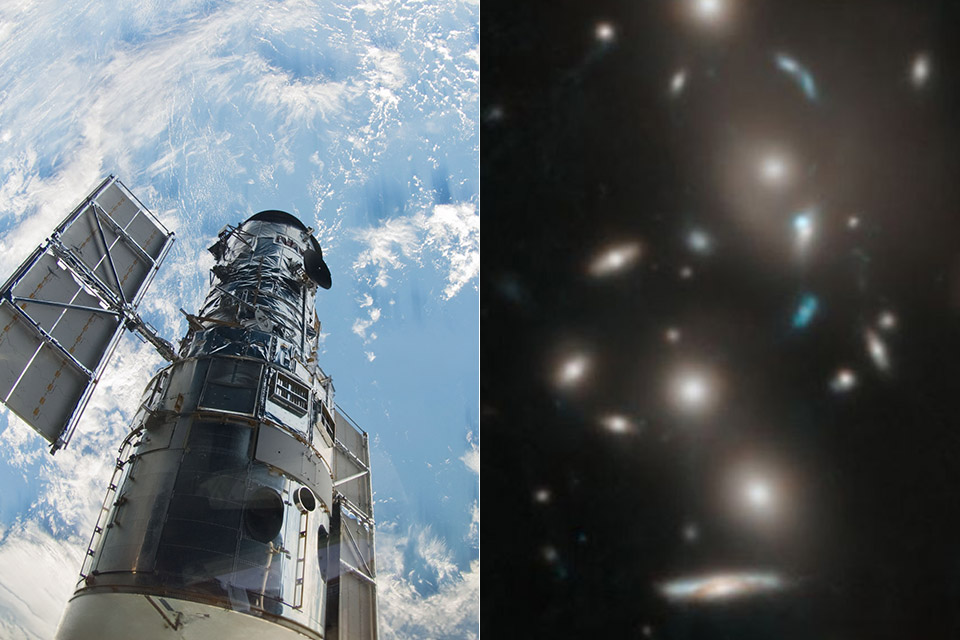
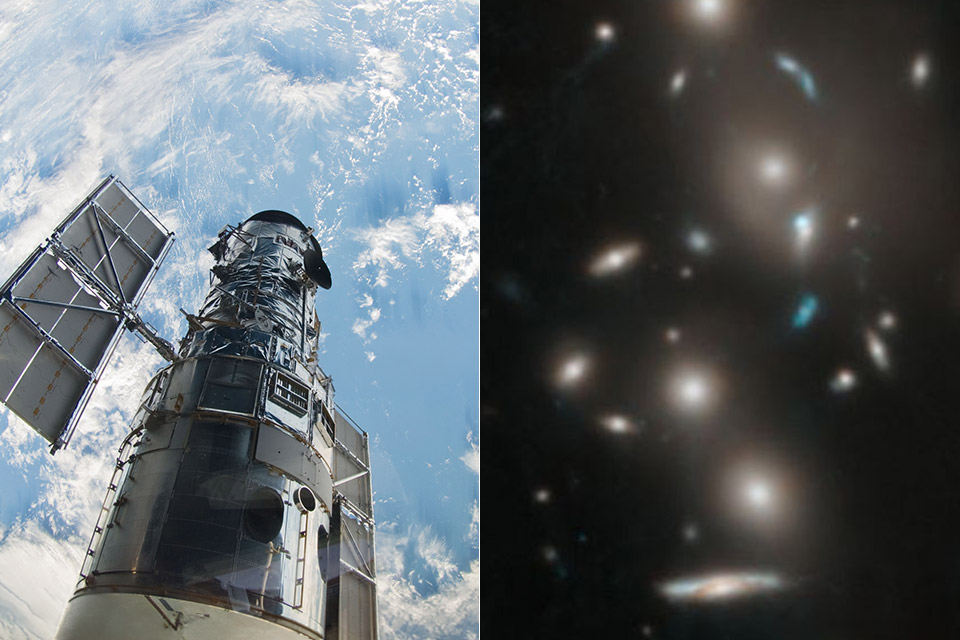
Astronomers released a striking new portrait from the Hubble Space Telescope that centers on the galaxy cluster MACS J1141.6-1905. Galaxies crowd together in the frame, showing a rich mix of shapes and sizes pulled toward the center-left area. Some appear stretched or distorted while others hold more familiar forms. A handful of foreground stars cut through the scene with sharp spikes extending outward, marking their closer position to us.
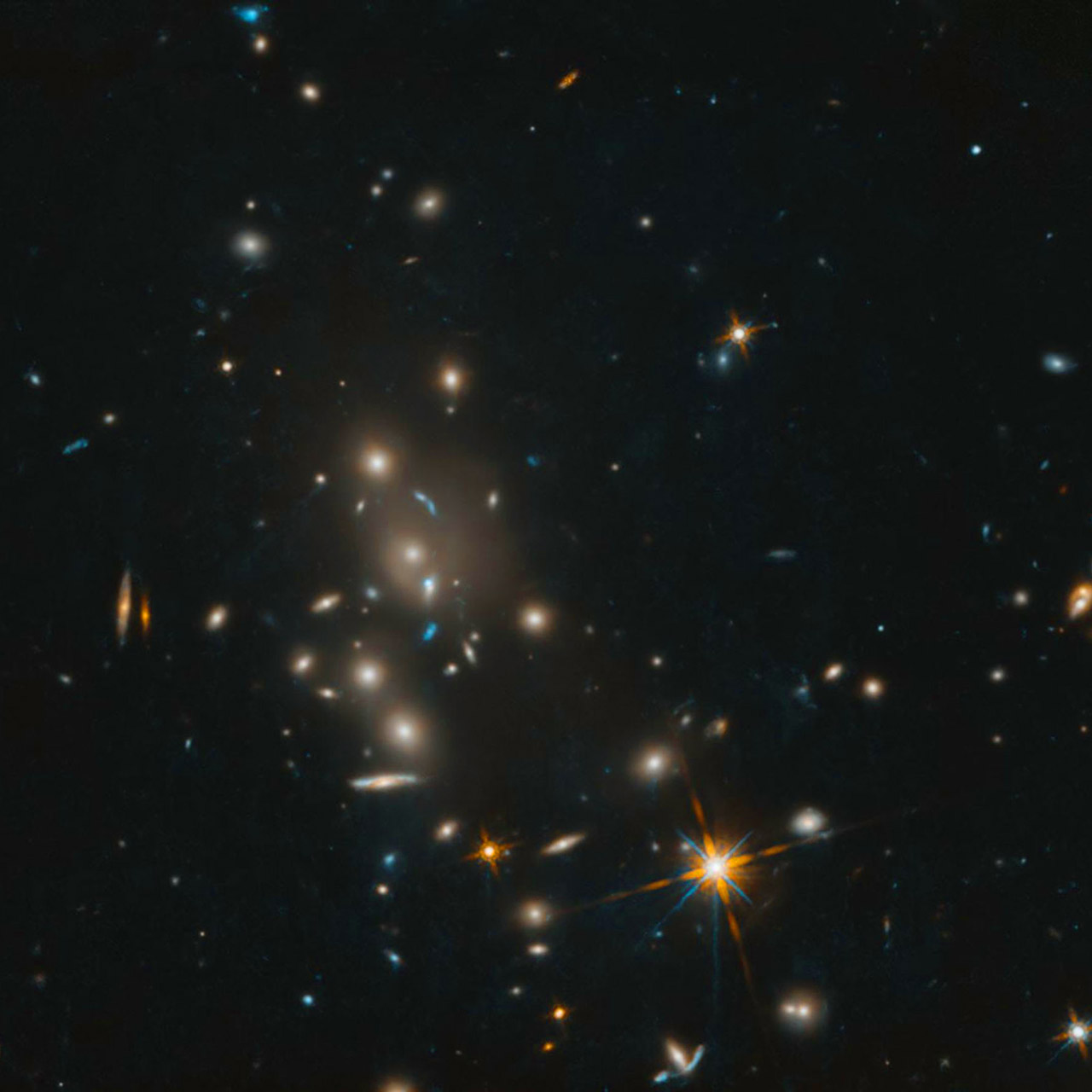
Our planet is separated from this huge cluster of galaxies in the Crater constellation by four billion light years. Its full name is a mouthful, derived from the “Massive Cluster Survey,” a large-scale effort dedicated to tracking some of the largest groups of galaxies ever seen. Using Hubble to detect not only visible light but also infrared was a game changer, allowing us to find previously concealed information. And the outcome is nothing short of amazing, resembling a three-dimensional picture of our universe emerging from the darkness of space, with layers of faraway things.

LEGO Technic NASA Artemis Space Launch System Rocket Building Toy for Boys & Girls – STEM Learning…
- BUILD AN OFFICIAL NASA ROCKET – Kids prepare to explore outer space with the LEGO Technic NASA Artemis Space Launch System Rocket (42221) building…
- 3-STAGE ROCKET SEPARATION – Young builders can turn the hand crank to watch the rocket separate in 3 distinct stages: solid rocket boosters, core…
- STEM BUILDING TOY FOR KIDS – This educational rocket kit was created in collaboration with NASA and ESA to showcase the authentic system that will…
Massive clusters like this one stand out in X-rays due to the burning hot gas that fills the space between galaxies. Researchers chose MACS J1141.6-1905 and related targets because they intended to obtain a closer look using special observing algorithms. One of the primary goals of such studies was to search for even more distant galaxies whose light had to travel a great distance and be distorted out of shape by immense gravity, a phenomenon known as gravitational lensing. That bending, in example, can make background objects appear significantly more obvious than they would otherwise.
Another major focus of the studies was determining what was going on in the core of this huge cluster of galaxies. Galaxies in there move quickly and interact in intricate ways, occasionally colliding or stripping material from one another. With Hubble’s new visible and infrared data, scientists now have a plethora of instruments to begin mapping out how those interactions play out. Every each piece of data they collect deepens our understanding of how these massive structures cling together and evolve.
The light from the background galaxies travels for billions of years, which means it takes an eternity to reach the cluster. Then, when it approaches Earth, the cluster’s gravity begins to bend the light into all sorts of strange forms, including arcs and even multiple copies of the same galaxy. Scientists may quantify those distortions to have a clearer understanding of how huge this cluster is, including all of the unseen dark matter that makes up the majority of it.
Hubble Opens a Fresh Window on Galaxy Cluster MACS J1141.6-1905
#Hubble #Opens #Fresh #Window #Galaxy #Cluster #MACS #J114161905