Why Giant Orange Spheres Hang From Power Lines…Meet the Aerial Marker Balls
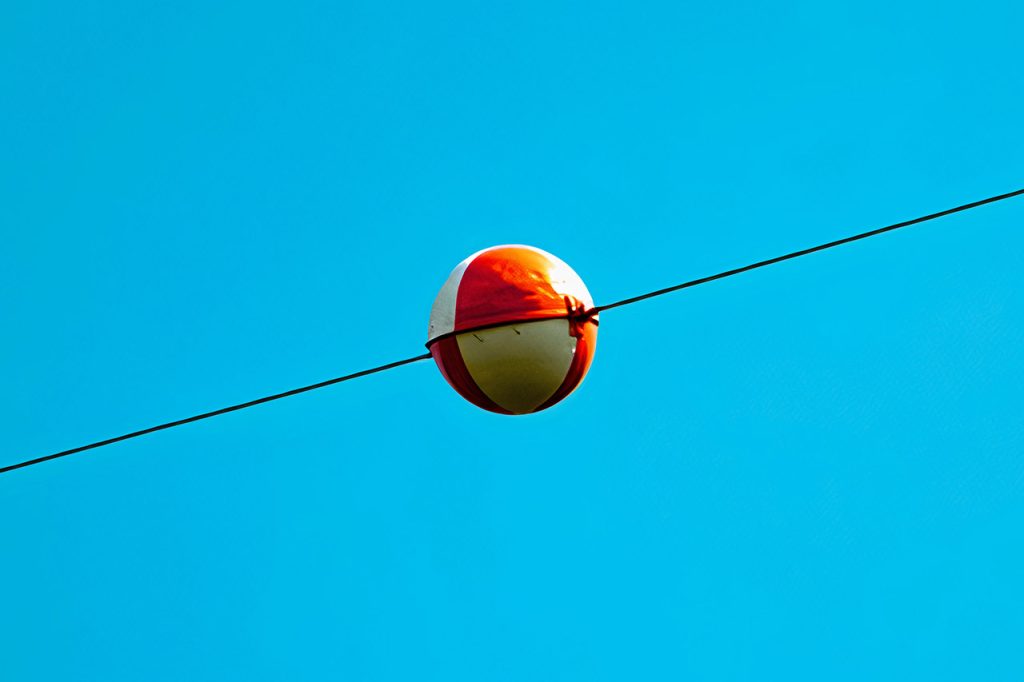

Most drivers clock them once from a freeway overpass and never ask again. Those bright spheres clamped to long spans of transmission line have a proper name, aerial marker balls, and a single assignment: make a nearly invisible wire obvious to anyone flying low enough to hit it.
Overhead conductors are thinner than one might imagine. When looking out from a cockpit, they appear to blend into the background, the sky, lake, tree line, or canyon wall, particularly in low light or when there is a haze to conceal things. However, towering transmission towers are far more visible. The cable that connects them is a completely different story; it’s nearly impossible to see in the distance, which is bad news for pilots who need to notice it.
Sale

Rossetta 3D Projector with 60 Scenes, Galaxy Star Projector for Room Decor
- Experience a Immersive HD 3D Universe: The innovative 4-in-1 design combines a 3D projector, ambient lighting, night light, and Bluetooth speaker…
- 60 Dynamic 3D Scenes & 12 Themes for Every Mood: Dive into 60 specifically designed, high-definition 3D projections across 12 captivating themes…
- Customizable Focus, Brightness & Timer: Tailor your 3D experience with adjustable brightness and precise focus, allowing you to create the perfect…
If a wing, skid, or rotor mistakenly struck that cable, it could easily break a line, crash a plane, start a fire, and kill people on both sides of the wreckage. To assist prevent this, aerial marker balls are used. These are huge, high-contrast dots that provide pilots with just enough time to climb or turn away. They are usually seen in regions where planes fly low, such as when approaching airports and heliports, navigating mountain passes, crossing rivers and lakes, flying through deep valleys, or making long overpasses over freeways. In contrast, neighborhood distribution lines rarely receive these because it is uncommon to need to fly a plane that close to the ground near streets.
The Federal Aviation Administration considers these spheres to be essentially unlit markers for pilots to view during the day. When it comes to exceptionally long catenary spans that traverse canyons, lakes, or rivers, each ball should be at least 36 inches across, or about the size of a giant beach ball. Smaller 20-inch spheres are acceptable on shorter or lower lines, such as those less than 50 feet high and less than 1500 feet from the end of a runway. They normally weigh between 10 and 25 pounds, but 17 pounds is a pretty typical weight. The spacing of these balls varies depending on the situation, but they are typically around 200 feet apart along the tallest wire, with the gap decreasing to 30 or 50 feet toward the runway end, where missing an approach is nearly impossible. If there are many lines running at the same height, personnel can stagger the balls to spread the load and wind force evenly. The guideline states that there can be no more than 25 feet of sag between a marked wire and an unmarked wire that is sitting higher – therefore the warning still accurately reflects the real risk.
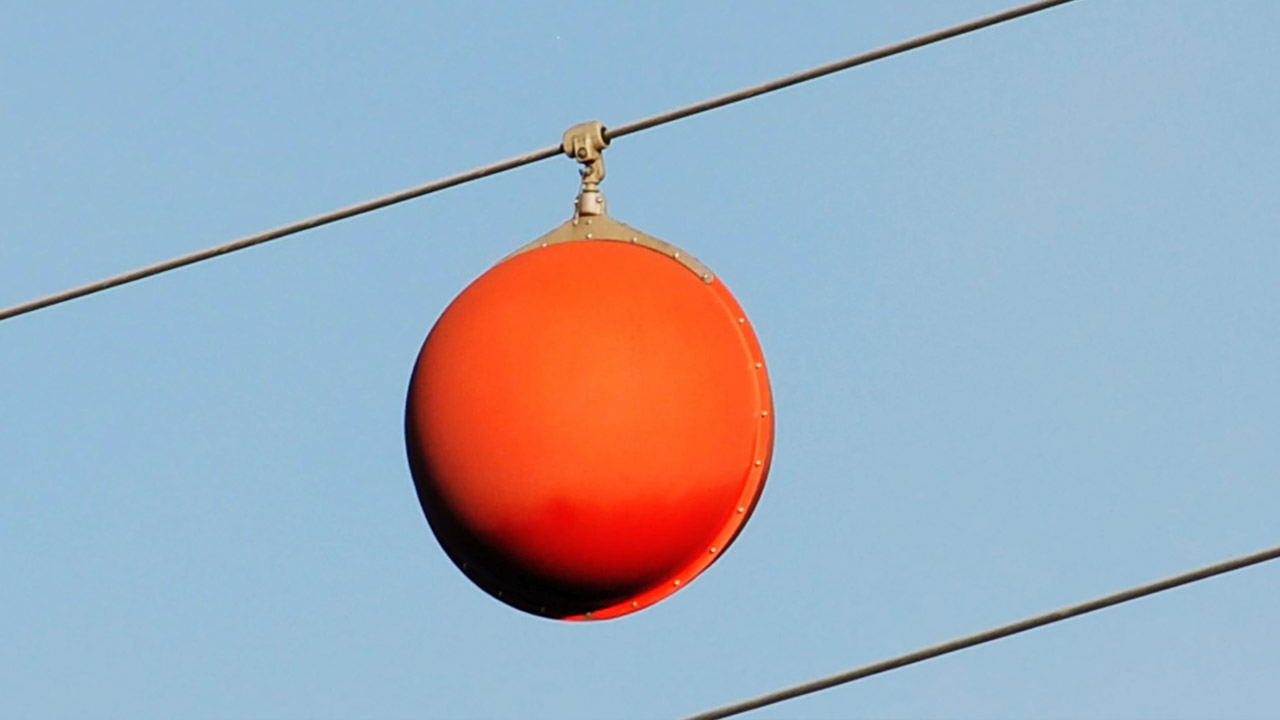
Color completes the picture, with aviation orange, white, and yellow being the only solid hues authorized. International orange, sometimes known as international danger orange, is certainly the most obvious because it stands out against a background of green hills, gray water, and blue sky. An alternating pattern is easier to read against a mixed background. Orange is frequently seen at either end of a designated length of wire. And if a length of wire requires fewer than four marks, each one is orange. Red appears in certain catalogs and in other countries, but in the United States, advisory wording is limited to orange, white, and yellow. None of these colors transmit voltage or hazard level. Each ball has the same job: to stay visible.
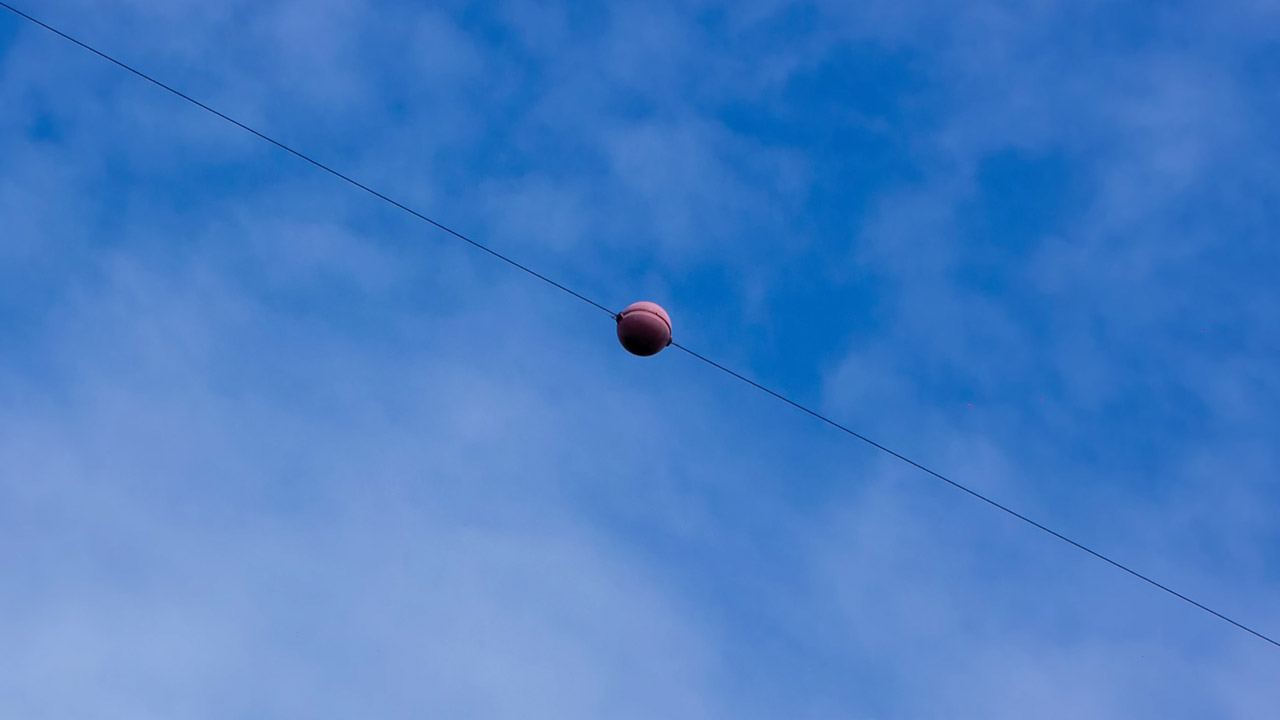
Nowadays, most balls are made of two UV stable plastic or fiberglass half shells with a layer of UV resistant coating to protect them from the weather. They come with internal bushings that accommodate conductors ranging from an eighth of an inch to an inch. Close the clamshell with four bolts. To prevent the shell from falling off the wire or being chewed up, use spiral wraps or snap clamps.
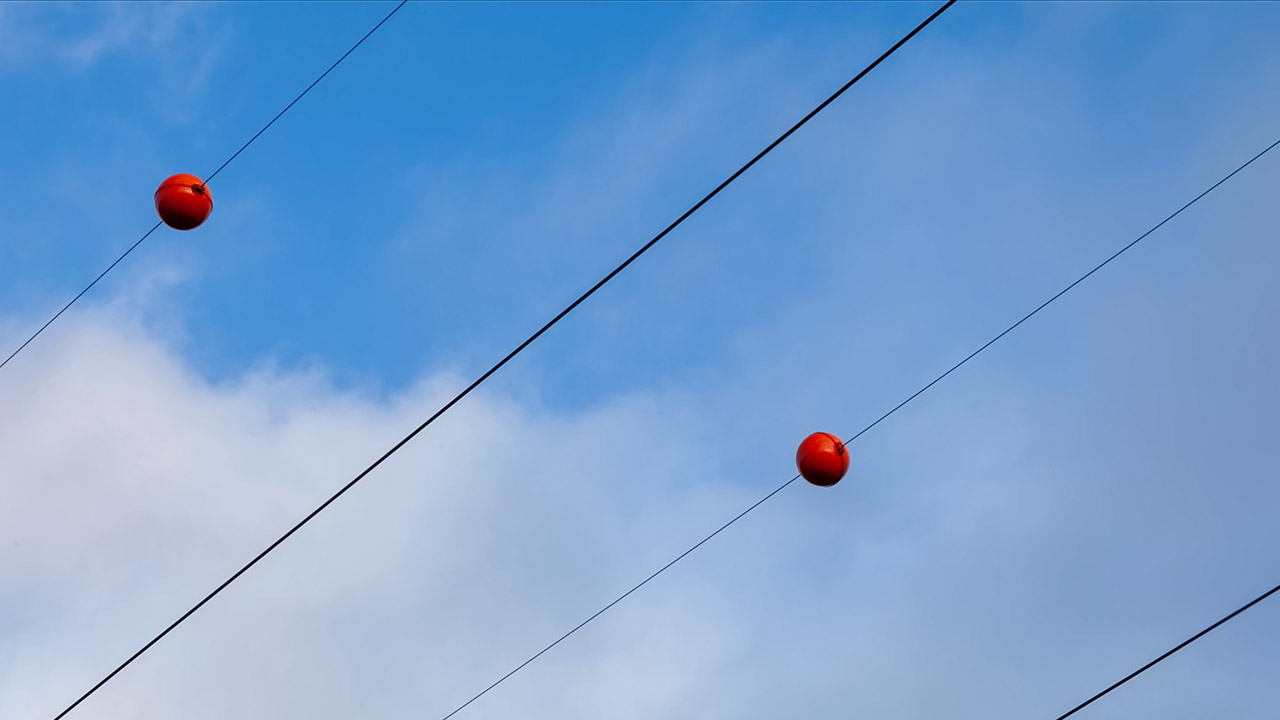
Standard ones are insulated, so the current cannot pass through the ball. However, some high voltage spans use conductive aluminum markers to let the electrical field to pass freely. However, getting them put on a live or recently grounded line is something that most people never see. Ground crews normally pre-assemble all of the necessary hardware, paint or tie off marks at 200-foot intervals, and then send out the helicopter. A lineman works from the skid, a small platform, or a seat on a long line as human external cargo. He opens the clamshell, seats it on the conductor, runs a cordless drill on the bolts, and wraps the retainers.
[Source]
Why Giant Orange Spheres Hang From Power Lines…Meet the Aerial Marker Balls
#Giant #Orange #Spheres #Hang #Power #LinesMeet #Aerial #Marker #Balls