If the U.S. wants to end the war with Iran by way of economic sanctions, China is key
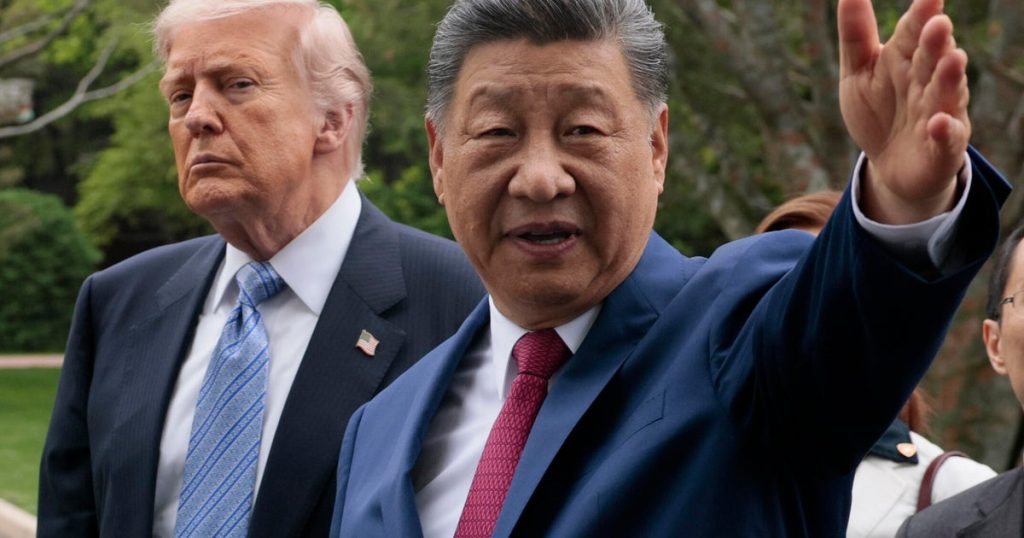
The language used Monday by Treasury Secretary Scott Bessent as he announced a new raft of sanctions against Iran was apocalyptic. The measures are part of the Trump administration’s plan to use economic pressure to force Iran to capitulate, to bring an end to the nearly six-month war and reopen the Strait of Hormuz.
The U.S. is “no longer managing the Iranian threat, we are ending it,” Bessent declared, with sanctions that he vowed would “sever every economic lifeline that sustains this tyrannical regime until Tehran stands alone.”
Operation Economic Outcast will expand the categories for secondary sanctions against countries and entities that do business with Tehran and introduce new sanctions in sectors including technology, shipping and digital assets.
But Iran experts have not been convinced the new measures will have the kind of impact that would force the theocracy to accept defeat in a war President Trump predicted would last no more than six weeks, not months.
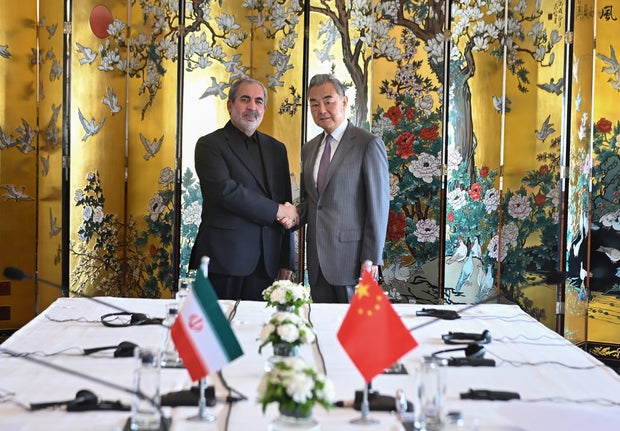
Evan Vucci-Pool/Getty/China Pool
For decades, various U.S. administrations have attempted to pressure Iran with sanctions. The regime has survived through a series of financial schemes and smuggling operations, according to the U.S. Treasury.
“They know how to cope,” Kate Dourian, a nonresident fellow at the Arab Gulf States Institute, told CBS News’ partner network BBC News on Tuesday. “They have the workarounds. So, I think most of what Mr. Bessent said was targeted at other countries, not Iran.”
In his announcement, Bessent said countries that maintain business relations with Iran should “expect to share in the isolation of a withering regime.”
Sixty entities deemed to be helping or trading with Iran were listed under the new sanctions on Tuesday, including in the United Arab Emirates, Singapore, Malaysia, Hong Kong, France, the U.K. and — crucially according to analysts — China.
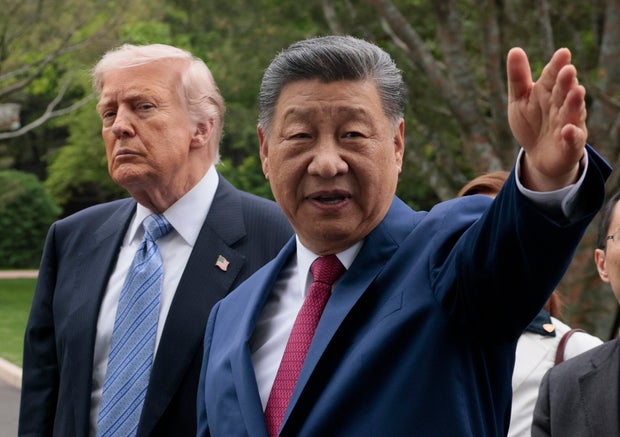
But the sanctions only target some private Chinese businesses, stopping short of the more consequential step of hitting the country’s major financial institutions. Without that, analysts say Bessent’s doomsday predictions for Iran will flop.
“This was not economic D-Day,” Brett Erickson, a Washington-based sanctions expert who runs Obsidian Risk Advisors, told CBS News, using Mr. Trump’s own language to describe the measures. “If the United States is unwilling to meaningfully target China, can Washington reasonably justify damaging our international relations and global standing, for a strategy with only a far-fetched likelihood of achieving victory?”
Iran’s life support system
Last week, the UAE, a U.S. ally, cut off all trade with Iran. That, experts say, could have a meaningful impact on the regime.
The Gulf country was the world’s biggest importer of Iranian goods in 2024, according to the World Trade Organization, and around 80% of Iran’s foreign currency exchange is done in Dubai, according to Miad Maliki, a senior fellow at the Foundation for Defense of Democracies who is also a former senior U.S. Treasury official.
The “UAE is going to be very instrumental in cutting off the regime’s access to procuring foreign currencies, but also getting access to its reserves — funds that it has generated from oil sales to China and are sitting in different banks,” he told CBS News last week.
But China is considered Iran’s real lifeline.
Last year, Chinese purchases of Iranian crude oil amounted to nearly 45% of the Iranian government’s budget, according to a U.S. government report from March.
“Iran’s economy today runs based on this kind of scheme of selling oil to China, and then either using the funds that are generated from sale of oil to China to pay for imports from China, but also moving some of those funds outside China,” said Maliki.
Javed Dar/Xinhua/Getty
He said sometimes the money Iran earns by selling its oil to China goes to support Iranian proxy groups in the Middle East, such as Hezbollah in Lebanon or the Houthi rebels in Yemen.
China’s major, state-backed banks have been accused of giving loans to small “teapot” refineries in the country, which then process sanctioned oil from Iran.
The U.S. Treasury has also accused China of faking the origins of Iranian oil; of falsely changing the legal ownership of Iranian ships to make them look Chinese-owned; and of building airports and electric grids in Iran instead of paying Iran money, which means they can avoid the SWIFT global banking system, where sanctions are applied.
Asked Monday whether Chinese banks would be among those hit by the new measures, Bessent said “no one is above the reach of U.S. sanctions.”
He also said there would be a “major announcement of a financial institution being sanctioned by the end of this week,” but offered no hints.
Chinese Foreign Ministry spokesman Lin Jian said Tuesday that China was firmly opposed to “illicit unilateral sanctions” and would “do everything necessary to firmly safeguard its rights and interests.”
Iran “is and was ready”
Iranians have suffered under decades of U.S. sanctions. The Iranian currency has plunged in value against the dollar and the head of the Iran-China Chamber of Commerce told Khabar Online last month that Iran could not afford to lose its maritime trade.
“The siege is worse than the war,” Hariri said, referring to the U.S. naval blockade of Iran’s ports and ships, adding that maritime costs had skyrocketed.
But Iranian Economy Minister Ali Madanizadeh said Monday that the country was “fully prepared” for the new U.S. sanctions, which he predicted would be “another defeat” for the Trump administration.
“Our defense is no longer so defensive; the enemies should wait for an attack,” he told Iranian state television, adding that neither China nor Russia had “accepted” the U.S. measures and that other countries would likely resist them, too.
“The government is and was ready and has a two-year plan to manage these events,” he said. “We also have our own tools and know how to play the game.”
If the U.S. wants to end the war with Iran by way of economic sanctions, China is key
#war #Iran #economic #sanctions #China #key